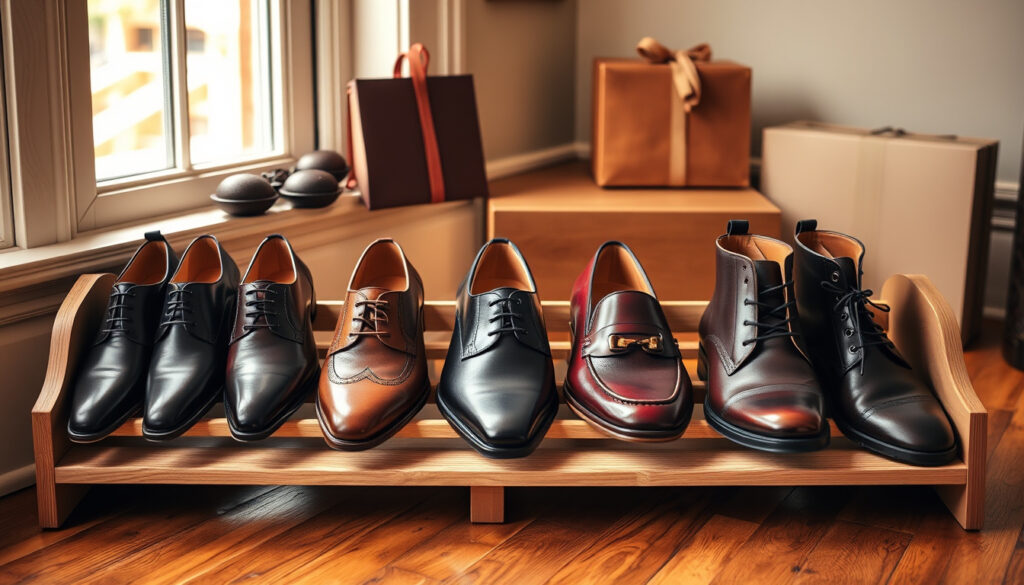
Man’s Shoes: Style Rules, Top Brands, Gift Meanings & More
Your grandfather’s adage about judging a man by his shoes holds up: footwear reveals style, lifestyle, and foot health. We investigate the 3‑shoe rule, popular brands, foot changes with age, and gifting superstitions.
Most searched men’s shoe style: Sneakers/Trainers ·
Top men’s shoe brand by query volume: Nike ·
3 shoe rule recommends: One casual, one formal, one athletic pair
Quick snapshot
- Feet can widen with age due to ligament changes (Florsheim (shoe fit guidance))
- A minimalist wardrobe can function with three pairs: sneakers, boots, dress shoes (Art of Manliness)
- Whether gifting shoes brings bad luck is culturally dependent and not universally confirmed (Rothy’s (travel insights))
- Exact shoe replacement timeline varies by wear frequency and shoe type (Rothy’s (travel insights))
- No fixed schedule, but rotating shoes extends life; many guides recommend replacing athletic shoes every 300–500 miles (GQ (men’s footwear guide))
- Expect brands to blend comfort technology with classic styles, especially in hybrid dress‑sneaker category (Man of Many (style trends))
The data confirms a clear winner in men’s footwear preferences.
| Attribute | Value |
|---|---|
| Most popular shoe style | Sneakers |
| Top brand | Nike |
| 3 shoe rule recommendation | Casual, formal, athletic |
| Common saying about shoes | Always look at a man’s shoes |
| Feet changes with age | Wider and longer |
| Gifting shoes superstition | Considered bad luck in some cultures |
What Are the Most Popular Men’s Shoes and Top Brands?
Top Shoe Styles by Popularity
Men’s footwear spans a wide spectrum, but some styles consistently dominate searches and sales. Sneakers lead the pack, followed by boots, loafers, and dress shoes. A GQ (men’s style magazine) roundup of essential men’s shoes lists sneakers, loafers, and boots as non‑negotiable staples. The Gentleman’s Gazette (sartorial authority) categorizes over 20 styles, from Oxfords to Chukka boots, and frames them as a hierarchy of formality.
Six styles, one pattern: the most versatile shoes blend comfort with occasion‑appropriateness.
| Style | Best Occasion | Key Feature | Popularity |
|---|---|---|---|
| Sneakers | Casual, athleisure | Cushioned sole, lightweight | Highest search volume |
| Loafers | Smart‑casual, office | Slip‑on, clean look | Very high |
| Oxfords | Formal, business | Lace‑up, closed lacing | High (dress category) |
| Chelsea Boots | Casual to smart‑casual | Ankle‑high, elastic side | Growing demand |
What this means: Bespoke Unit (footwear experts) place Oxfords at the formal peak and sneakers at the casual base, meaning your style choice signals the dress code before you even speak.
Leading Men’s Shoe Brands
Brand equity plays a huge role in men’s shoe decisions. Nike leads in search volume globally, with Adidas, New Balance, Vans, and Converse close behind. A Man of Many (men’s lifestyle site) guide highlights these brands as pillars of the casual shoe market. For dress shoes, The Noble Shoe (curated footwear retailer) recommends Allen Edmonds and Crockett & Jones as benchmarks of quality. Florsheim (American heritage brand) offers another trusted name for classic dress shoes.
The pattern: a few mega‑brands control casual wear, while niche specialists dominate formal categories — choosing between them depends on whether you prioritize fashion flexibility or craftsmanship longevity.
Men’s footwear marketing often pits trendy vs timeless, but the data from GQ and Gentleman’s Gazette suggests the smartest buyer keeps one foot in each camp: a branded sneaker for daily use and a well‑made Oxford for events.
What Is the 3 Shoe Rule?
Origins of the 3 Shoe Rule
The “3 shoe rule” appears in two contexts: minimalist wardrobe curation and travel packing. Art of Manliness (men’s self‑improvement resource) popularized the wardrobe version, arguing that three pairs — canvas sneakers, brown leather boots, and black leather dress shoes — cover casual, smart‑casual, and formal occasions. Meanwhile, Rothy’s (sustainable footwear brand) applies the same logic to travel: one pair for walking, one for dining, one for workouts.
“You can build a functional wardrobe with just three pairs of shoes: canvas sneakers, brown leather boots, and black leather dress shoes.”
How to Apply the 3 Shoe Rule
- Casual pair: Canvas sneakers or minimalist trainers – for weekends, errands, and relaxed outings.
- Smart‑casual pair: Brown leather boots (Chukka or Chelsea) – for dinners, casual offices, and date nights.
- Formal pair: Black leather dress shoes (Oxfords or Derbies) – for meetings, weddings, and formal events.
Martin Dingman (boutique shoe maker) echoes this trio, adding that rotation extends the life of each pair. The catch: the rule works best for men who already own the basics — if you’re starting from zero, it’s a solid foundation, not a complete wardrobe.
The 3‑shoe rule assumes you don’t need specialized footwear (hiking boots, formal dance shoes). If your lifestyle includes niche activities, break the rule — but for 80% of daily life, three pairs is enough.
The pattern: the 3-shoe rule is a starting point, not a finish line—build from there.
What Is the Saying About a Man’s Shoes?
The Quote “Always Look at a Man’s Shoes”
“Always look at a man’s shoes, they will tell you a lot about him.”
— Common style adage, referenced in fashion commentary
The saying appears in popular culture — from films to style columns — and has been cited by GQ (men’s fashion authority) as shorthand for judging attention to detail.
Interpretations of the Saying
Why do shoes reveal so much? Bespoke Unit (footwear specialists) explain that shoes sit at the bottom of an outfit, often overlooked, but their condition and style signal whether you care about the finishing touches. Worn‑out soles or mismatched colors suggest haste; polished leather or clean sneakers suggest intent. Gentleman’s Gazette adds that the formality gradient of shoes makes them a silent dress‑code communicator.
Why this matters: first impressions are formed in seconds, and shoes are one of the first things people notice when you walk into a room. Investing in a well‑maintained pair isn’t vanity — it’s social signalling with a practical payoff.
The catch: shoes broadcast intentions before a word is spoken, making them a silent but powerful tool.
Do Feet Get Wider with Age?
Why Feet Change Size Over Time
Yes — many men find their shoe size changes after 40. Ligaments and arches can loosen, causing feet to lengthen and widen. Florsheim (historic shoe brand with fit expertise) notes that proper fitting becomes more important with age to avoid blisters and joint pain. While specific clinical data varies, the trend is widely acknowledged in footwear guides.
How to Choose Shoes for Aging Feet
- Get measured every time you buy — foot dimensions change gradually.
- Look for shoes with removable insoles so you can add orthotics if needed.
- Avoid narrow toe boxes; opt for rounded or wide versions of classic styles.
Articles of Style (fashion editorial) recommends trying on shoes in the afternoon when feet are naturally slightly swollen to ensure all‑day comfort.
A man who ignores foot changes risks chronic pain, reduced mobility, and a narrower shoe selection later. Choosing the right fit today prevents a much bigger problem tomorrow.
The implication: ignoring foot changes today limits mobility and comfort later.
Is Gifting Shoes Bad Luck? And What Does It Mean When a Woman Buys a Man’s Shoes?
Superstitions Around Gifting Shoes
In some cultures — particularly in Chinese and certain Southeast Asian traditions — gifting shoes is considered bad luck because the word for “shoes” sounds like “evil” or “walking away,” implying the recipient will leave the relationship. Rothy’s (cultural style commentary) notes that this superstition is not universal; in Western contexts, shoes are often a practical and appreciated gift. The key is knowing your recipient’s background.
The trade‑off: if you’re unsure, include a symbolic token (like a coin) to “pay” for the shoes and neutralize the superstition — a common workaround.
Meaning of a Woman Buying Shoes for a Man
When a woman buys a man’s shoes, it can carry romantic or caretaking significance — she’s investing in his appearance and comfort. Art of Manliness frames it as a gesture of intimacy, similar to choosing a watch or cologne. However, cultural context matters: in some families, it’s simply practical shopping. The implication for men is that accepting such a gift shows trust and openness to her taste.
“When she picks out your shoes, she’s telling the world she cares about how you present yourself.”
— GQ (style editors)
Gifting shoes carries weight: accept the gesture, but offer input on fit and style so the shoes are something you’ll actually wear. If you’re shopping for a man, avoid heavy superstition by asking him what he needs — it turns a potential gaffe into a thoughtful gift.
For the Canadian man building a sensible footwear collection, the choice is clear: start with the 3‑shoe foundation, keep fit top of mind as you age, and if a partner offers to buy you shoes, let her — just check the fit and the superstition before you say yes.
For a deeper dive into the three-pair rule and top brands, check out this mens shoes style guide from Canadian Policy.
Frequently asked questions
What are the best men’s shoes for standing all day?
Shoes with good arch support and cushioning, such as New Balance 990s or nursing‑style sneakers, are recommended for long hours on your feet. Look for removable insoles to add custom orthotics if needed. Art of Manliness suggests prioritizing comfort over style for work‑heavy routines.
How often should men replace their shoes?
Every 6–12 months, or sooner if the sole is worn unevenly, the heel lining is torn, or cushioning has flattened. GQ recommends replacing athletic sneakers every 300–500 miles of walking.
What shoe color is most versatile for men?
Dark brown is often cited as the most versatile because it pairs with navy, grey, tan, and even black trousers. Bespoke Unit rates brown as the best bridge colour between casual and formal.
Are leather shoes better than synthetic for durability?
Yes, full‑grain leather shoes can last decades with proper care, while synthetic materials often break down faster. The Noble Shoe recommends Goodyear‑welted leather shoes for maximum longevity.
What is the most comfortable men’s shoe brand?
Comfort is subjective, but brands like New Balance, Ecco, and Clarks consistently receive high marks for cushioning and fit. Man of Many rates New Balance as a top pick for all‑day wear.
How do I measure my shoe size at home?
Trace your foot on a piece of paper, measure the length from heel to longest toe, and consult a size chart. Measure both feet — they are often slightly different. Florsheim provides a free printable measuring guide on its site.
Why do men’s shoes have different width options?
Men’s feet vary in width, and standard D width doesn’t fit everyone. Brands offer narrow (B), medium (D), wide (E), and extra‑wide (EE) to accommodate different foot shapes. Articles of Style advises always choosing width over length when in doubt.
More related posts
 Emma Thompson: Biography, Family, Children, and Career Guide
 Cast of Point Break (1991): Full List, Trivia, Behind-the-Scenes
 Ant-Man: Age Rating, Box Office Flop, and Franchise Future
 Pope John Paul II: Life, Death, LGBTQ Stance, and Last Words
 Jameela Jamil: Disability, Sexuality, Partner & More
 I Nuclear Energy Renewable or Nonrenewable? Key Fact Explained
 Necar Zadegan: Bio, Ethnicity, and Career Highlights
