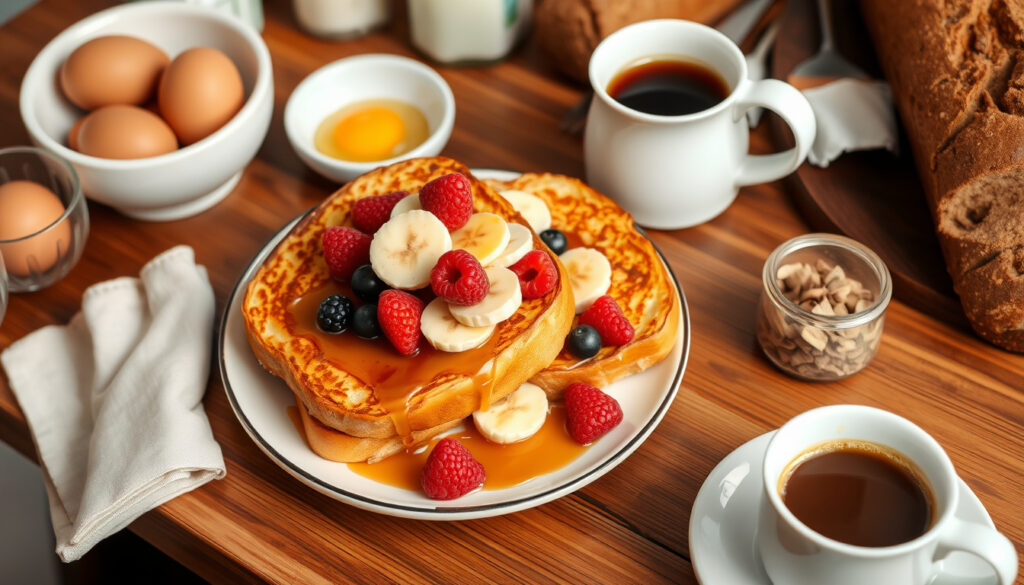
How to Make French Toast: Step-by-Step Guide with Healthy Tips
You know those mornings when you crave something warm, golden, and satisfying but also don’t want to spend forty minutes in the kitchen? French toast hits that sweet spot — quick to make, endlessly adaptable, and already a favorite on breakfast tables everywhere. But here’s the thing most guides skip: with a few smart swaps, the same comfort food can work for anyone watching their blood sugar, including people managing diabetes. This guide walks through each step, reveals the tricks that separate good French toast from great, and shows how to tweak the classic recipe so it’s both indulgent and health-conscious.
Prep Time: 10 minutes ·
Cook Time: 5 minutes ·
Total Time: 15 minutes ·
Servings: 2 slices ·
Calories per Serving: 350
Quick snapshot
- Brioche or thick bread (BBC Good Food, trusted recipe publisher)
- Eggs, milk, cinnamon, vanilla (BBC Good Food, trusted recipe publisher)
- Butter for cooking (BBC Good Food, trusted recipe publisher)
- Use stale bread for best texture (Bon Appétit, culinary authority)
- Soak bread briefly—not too long (Bon Appétit, culinary authority)
- Cook over medium heat for even browning (Bon Appétit, culinary authority)
- Replace white bread with whole grain (Diabetes UK, UK diabetes charity)
- Use sugar-free syrup or fruit (Diabetes UK, UK diabetes charity)
- Limit portion to one slice (Diabetes UK, UK diabetes charity)
- Prep to cook ratio: 2:1 (10 min prep, 5 min cook)
- Total time under 15 minutes
| Origin | Ancient Rome (allegedly) |
|---|---|
| Common Bread | Brioche or challah |
| Typical Toppings | Maple syrup, berries, powdered sugar |
| Average Calories | 350 per two slices |
| Prep to Cook Ratio | 2:1 (10 min prep, 5 min cook) |
These numbers give a baseline, but the real control over nutrition comes from ingredient choices, not portion size alone.
How to make French toast step by step?
The classic technique is simple but easy to get wrong. Four things matter: the bread, the custard, the soak, and the heat. Get these right and you’ll have a result that’s crispy outside, tender inside, and never soggy.
Choose the right bread
Thick, slightly stale bread is the foundation. Day-old brioche or challah soaks up custard without disintegrating, giving you that pillowy center. Thin sandwich bread turns mushy because it absorbs liquid too quickly relative to its structure. BBC Good Food, trusted recipe publisher recommends slices at least 3 cm thick for best results.
Make the custard
The standard ratio is 1 egg per ¼ cup milk (about 60 ml). Whisk thoroughly so the yolks and milk are fully combined — streaks of egg white will cook unevenly. Add a pinch of salt, ½ teaspoon cinnamon, and ½ teaspoon vanilla. Bon Appétit, culinary authority warns that too much milk makes the custard watery, leading to a soggy, pale crust.
Soak the bread
Dip each slice for 10 to 15 seconds per side. The bread should feel saturated but not falling apart. Over-soaking, especially with fresh or thin bread, produces a wet interior that never sets during cooking. The Picky Eater, healthy food blog specifies 2 minutes per side for thicker bread, then a final minute after flipping.
Cook on medium heat
Heat a skillet over medium heat and add butter. Cook each slice for 2 to 3 minutes per side until golden brown. High heat burns the outside before the egg sets inside. Low heat dries the bread out. BBC Good Food, trusted recipe publisher notes that medium heat gives you a crisp, even crust.
Serve with toppings
Serve immediately — French toast loses its crisp texture quickly. Classic toppings include maple syrup, fresh berries, and a dusting of powdered sugar. For a healthier version, replace syrup with a compote of simmered berries or a dollop of Greek yogurt.
The step people get wrong most often is heat. A medium flame plus butter creates the crisp shell; high heat guarantees a burnt exterior and a raw center. Controlling that heat is the single biggest lever you have.
What is the trick to French toast?
Five subtle techniques separate a decent slice from a memorable one. None require extra ingredients — just better timing and a few small adjustments.
Use stale bread
Fresh bread is too soft to hold up during soaking. Day-old bread has lost some moisture, meaning its crumb structure stays intact when dipped. Bon Appétit, culinary authority calls this “the single most important tip” for French toast that isn’t mushy inside.
Don’t oversoak
The soak time matters more than most people think. A quick dip — 10 to 15 seconds per side — gives the custard time to coat the interior strands without flooding them. Over-soaking collapses the bread’s structure, and no amount of cooking can fix that.
Add a pinch of salt
Salt is not about making the toast salty. It enhances the sweetness of the custard and the caramelization on the crust, balancing flavor without adding sugar. This is a standard principle across pastry kitchens.
Cook in butter
Butter browns better than oil because its milk solids accelerate the Maillard reaction. The result is a richer color and a nutty flavor that oil cannot replicate. Bon Appétit, culinary authority recommends clarifying the butter first so the milk solids don’t burn before the toast is done.
Let rest after cooking
After frying, let the slices rest on a wire rack for 1 minute. This allows steam to escape instead of condensing inside the bread, which keeps the crust crispy. Resting on a plate traps steam and softens the bottom.
Each of these tricks targets a specific failure mode: stale bread prevents structural collapse, short soaking prevents sogginess, salt boosts flavor without calories, butter controls browning chemistry, and resting preserves texture. Together they turn a simple breakfast into a reliable technique.
What is the most common mistake in making French toast?
Most failures fall into five categories. Recognize them and you’ll avoid the most frequent complaints from home cooks.
Using thin bread
Sliced sandwich bread from a typical supermarket loaf is too thin. It absorbs custard unevenly and becomes mushy in seconds. BBC Good Food, trusted recipe publisher states that thick-cut bread is non-negotiable for good French toast.
Not preheating the pan
A cold pan causes the custard to seep into the bread before cooking begins, creating a dense, sodden center. The pan needs to be medium-hot before the first slice touches the surface. Test with a drop of water — it should sizzle immediately.
Overcooking
Cooking beyond 3 minutes per side dries the custard and toughens the bread. French toast is done when the surface is golden brown and the center is set but still tender. Overcooked slices turn rubbery.
Using too much milk
Bon Appétit, culinary authority explicitly warns that excess milk in the custard leads to a pale, weakly browned crust because the milk-to-egg ratio is off. Stick to 1 egg per ¼ cup milk for a custard that browns well.
Skipping seasoning
Cinnamon and vanilla are not optional — they are what makes French toast taste like French toast rather than sweet scrambled eggs on bread. A pinch of salt and a scrape of nutmeg also help.
“The most common mistake is using bread that’s too thin. French toast needs a canvas, not a postage stamp.”
— BBC Good Food, trusted recipe publisher
Can diabetics have French toast?
Yes, with smart adjustments. French toast is normally high in carbohydrates from bread and added sugar, but swapping a few ingredients transforms it into a meal that fits within diabetes management plans. Diabetes UK, UK diabetes charity explicitly says French toast can be adapted for people with diabetes.
Use whole grain bread
Whole grain or wholemeal bread has a lower glycemic index than white bread, meaning it raises blood sugar more slowly. Diabetes UK, UK diabetes charity recommends 2 slices of wholemeal bread (40 g each) as the base for a diabetes-friendly version.
Limit added sugar
Skip the maple syrup on top and the sugar in the custard. The natural sweetness from berries or a light dusting of cinnamon is enough. Defeat Diabetes, diabetes management organization offers a low-carb version using sugar-free maple syrup that yields about 4.3 g net carbs per serving.
Control portion size
One slice instead of two keeps the carbohydrate load within typical breakfast budgets. Gestational Diabetes Recipes, specialized recipe site recommends 4 halves of bread per person (compared to a standard portion of 6-8 halves) to stay within gestational diabetes allowances.
Pair with protein
Adding nuts, Greek yogurt, or unsweetened peanut butter slows glucose absorption because protein and fat blunt the post-meal blood sugar spike. Milk & Honey Nutrition, registered dietitian site pairs sourdough French toast with unsweetened peanut butter and frozen berries for a balanced breakfast.
Choose sugar-free syrup
Artificial sweeteners or sugar-free syrups replace traditional maple syrup without the carbohydrate load. Defeat Diabetes, diabetes management organization specifies sugar-free maple syrup in their low-carb recipe, alongside low-carb bread.
“French toast can absolutely be part of a diabetes-friendly diet if you swap the white bread for whole grain and skip the syrup.”
— Diabetes UK, UK diabetes charity
The diabetic-friendly versions trade about 20 g of carbohydrates per serving (from bread and syrup) for fiber-driven slow absorption. The meal becomes more satiating but less sweet. For someone managing blood sugar, that trade-off is worth making.
French Toast vs. Pancakes: Which Is Better for Blood Sugar?
Both are breakfast staples, but they affect blood sugar differently. Five factors matter most.
Five metrics, one pattern: French toast edges ahead mainly because eggs add protein, which slows glucose absorption, while pancake batter typically relies more heavily on refined flour.
| Factor | French Toast (classic) | French Toast (diabetic-adjusted) | Pancakes (classic) |
|---|---|---|---|
| Glycemic index | Moderate (bread-dependent) | Lower (whole grain bread) | High (refined flour) |
| Fiber content | ~1 g per slice | ~3–4 g per slice | ~0.5 g per pancake |
| Calories | ~350 per 2 slices | ~280 per 2 slices | ~350 per 3 pancakes |
| Protein | ~12 g from eggs | ~15 g (eggs + milk) | ~6 g |
| Nutritional flexibility | Moderate | High (swap bread, add protein) | Low (base is mostly flour) |
The implication: French toast offers more leeway for blood-sugar-friendly tweaks because its bread base can be swapped and its egg-based custard already provides protein. Pancakes, being flour-and-sugar heavy, require more drastic substitutions to lower glycemic impact.
Confirmed vs. Unclear
Confirmed facts
- Using day-old bread improves texture (Bon Appétit, culinary authority)
- Custard with eggs and milk works for French toast
- Medium heat is ideal for cooking
What’s unclear
- Best bread type is subjective — brioche vs. sourdough vs. wholemeal depends on taste and health goals
- Optimal soaking time varies by bread density (from 10 seconds to 5 minutes per side)
- Exact nutritional value depends on ingredients and portion size
For a quicker take on the classic, try this easy 15-minute French toast recipe that delivers golden results in under a quarter of an hour.
Frequently asked questions
Can I use almond milk instead of dairy?
Yes, unsweetened almond milk works as a substitute. Use ¼ cup per egg and add a pinch of salt to compensate for lower protein content, which can affect browning. Diabetes UK, UK diabetes charity recommends low-fat skimmed milk as their default, but almond milk is a viable lower-carb alternative.
How to make vegan French toast?
Replace eggs with a mixture of 1 tablespoon ground flaxseed and 3 tablespoons water per slice. Use plant-based milk. Cook in coconut oil or vegan butter. The texture is denser than egg-based French toast but still flavorful.
What is the best skillet for French toast?
A non-stick or cast-iron skillet works best. Non-stick reduces the risk of sticking and makes flipping easier. Cast iron retains heat evenly, which helps maintain consistent temperature across the cooking surface.
How to keep French toast warm for a crowd?
Place cooked slices on a wire rack set over a baking sheet in a 200°F (95°C) oven. The wire rack prevents steam from softening the bottom. This method keeps slices crisp for up to 30 minutes.
Can I add protein powder to the custard?
Yes, but add only 1 scoop per 2 eggs and whisk thoroughly to avoid lumps. Protein powder thickens the custard, so you may need an extra tablespoon of milk to maintain the correct consistency.
How to reheat French toast?
Reheat in a toaster, air fryer, or oven at 350°F (175°C) for 3 to 4 minutes. Avoid the microwave, which turns the crust soggy. Reheated slices are best eaten immediately.
What is the origin of French toast?
The earliest known recipe dates to Ancient Rome, where a dish called “Pan Dulcis” involved bread soaked in milk and eggs then fried in oil. The French version emerged later, but the concept predates modern France by centuries.
Related reading
- How to Make Soup Stock — Another staple cooking technique that pairs perfectly with mastering breakfast basics.
- Cotelette de Porc au Four — A complete recipe for baked pork chops that complements this French toast guide as a fellow cooking resource.
For anyone deciding between indulgent and health-conscious mornings, the choice is clear: use thick, whole-grain bread, measure your custard ratio, cook on medium heat, and skip the sugary toppings. That approach gives you the comfort of classic French toast without the blood sugar spike.
More related posts
 Ariel Winter: Biography, Emancipation, and Breast Reduction
 Fiona Dourif: Biography, Age, Family, Career & FAQs
 Lionel Messi 2025: Net Worth, Retirement, Goals & Full Bio
 Silverback Gorilla Facts: Strength, Diet, and Behavior
 Yvonne Strahovski: Biography, Age, Career, and Personal Life
 Carmelo Anthony: NBA Career and Karmelo Trial Confusion
 Tumbler Ridge Shooting Suspect – Facts, Timeline and RCMP Response
 Neon Streamer (N3on): Biography, Age, Net Worth and More
