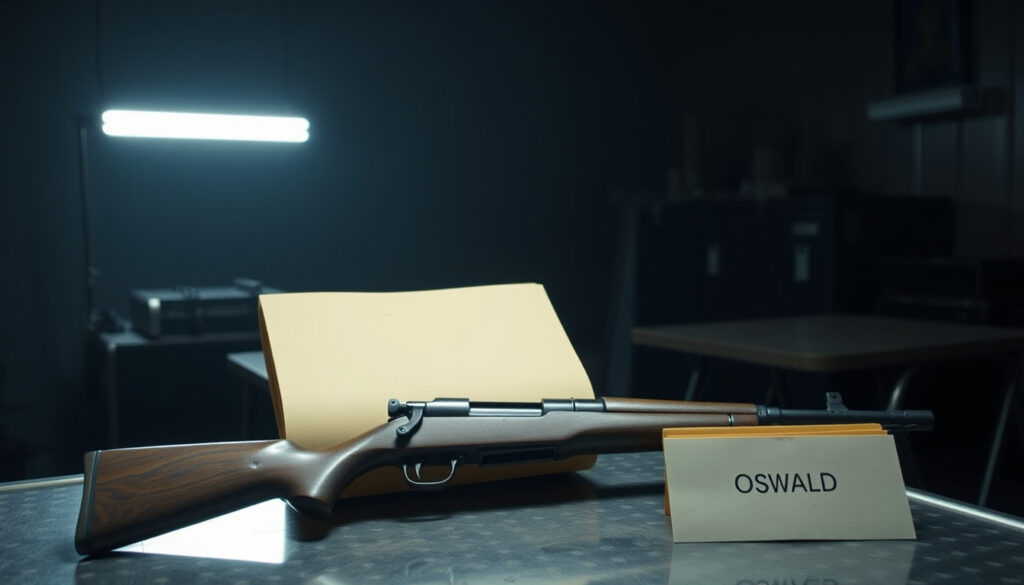
Lee Harvey Oswald: Capture, Wife, Funeral & Unanswered Questions
Few episodes in American history have been replayed frame by frame quite like the 48 hours between John F. Kennedy’s assassination and Lee Harvey Oswald’s own death. Yet even now, the small, human details—how he was caught, who paid for his burial, and what became of his wife—remain surprisingly obscure.
Born: October 18, 1939 ·
Assassinated JFK: November 22, 1963 ·
Arrested: November 22, 1963 ·
Killed by Jack Ruby: November 24, 1963 ·
Age at death: 24 ·
Burial site: Rose Hill Cemetery, Fort Worth, Texas
Quick snapshot
- Oswald fired the shots that killed JFK from the Texas School Book Depository (National Archives (Warren Commission Report))
- Oswald murdered Dallas police officer J.D. Tippit (Britannica (encyclopedia publisher))
- Whether Oswald had any accomplices or acted on behalf of others (National Archives (Warren Commission Report))
- Oswald’s true motive for the assassination (Britannica (encyclopedia publisher))
- Arrest at Texas Theatre at ~1:45 p.m. on Nov 22, 1963 (The Sixth Floor Museum at Dealey Plaza)
- Shot by Jack Ruby at 11:21 a.m. on Nov 24, 1963; died at 1:07 p.m. (National Archives)
- Oswald’s daughters continue to lead private lives away from the spotlight
- Remaining JFK records are still being declassified; the official conclusion remains that Oswald acted alone
Eight key facts frame the life and death of Lee Harvey Oswald, from his birth in New Orleans to his burial in Fort Worth.
| Label | Value |
|---|---|
| Full name | Lee Harvey Oswald |
| Birth date | October 18, 1939 |
| Place of birth | New Orleans, Louisiana |
| Death date | November 24, 1963 |
| Cause of death | Gunshot wound (murder by Jack Ruby) |
| Spouse | Marina Nikolayevna Prusakova (1961–1963) |
| Children | June Lee Oswald, Rachel Lee Oswald, Audrey Marina Rachel Oswald |
| Known for | Assassination of President John F. Kennedy |
How did Lee Harvey Oswald get caught?
Within 80 minutes of the Kennedy assassination, Oswald was in police custody. After shooting President Kennedy at 12:30 p.m. on November 22, 1963, he left the Texas School Book Depository, walked to his rooming house, and then headed toward Oak Cliff. Around 1:15 p.m., Officer J.D. Tippit was shot and killed—Oswald would later be charged with that murder as well.
Minutes later, a theater employee named Calvin Brewer spotted a man ducking into the Texas Theatre without buying a ticket and called police. By 1:38 p.m., NBC 5 Dallas-Fort Worth (local news affiliate) reported that news of Kennedy’s death was spreading as Oswald entered the theater. The Guardian (UK newspaper) notes that fifteen police officers surrounded the building and four officers were needed to subdue Oswald inside the auditorium. The arrest was documented by The Sixth Floor Museum at Dealey Plaza (museum at the former Texas School Book Depository), which records that the struggle occurred inside the theater. Oswald was initially charged with the murder of Officer Tippit; later that evening he was also charged with the assassination of President Kennedy.
Oswald was picked up not because he matched a detailed description of the shooter, but because a suspicious man ducked into a movie theater. The arrest was a matter of luck and quick police work—yet it also set the stage for two days of interrogations that produced no confession.
The implication: Oswald’s capture was swift and chaotic, but the chain of evidence linking him to the assassination was assembled afterward, not before. The FBI (U.S. federal law enforcement agency) would later conduct some 25,000 interviews and conclude that Oswald acted alone.
What happened to Lee Harvey Oswald’s wife after his assassination?
Marina Oswald was 22 years old and the mother of two young daughters, June and Rachel, when her husband was killed. Within hours of the assassination, she was taken into protective custody and questioned by the Secret Service. She cooperated extensively with the Warren Commission, providing testimony about Oswald’s behavior, his political beliefs, and their life together.
According to Britannica (encyclopedia publisher), Marina later remarried Kenneth Porter in 1965 and had a third child. She has given occasional interviews over the decades, most notably in a 2019 documentary where she described Oswald as “a difficult man.” She has lived a largely private life in the Dallas area.
Her daughters, June Lee Oswald (born 1961) and Rachel Lee Oswald (born 1963), were raised largely out of the public eye. June later had a daughter, Audrey Marina Rachel Oswald, who completed the trio of Oswald grandchildren. None of them have sought public attention.
Marina has never given a full, uncensored account of what she knew before the assassination. The few interviews she has granted have been carefully controlled, leaving a significant gap in the historical record.
The takeaway: Marina Oswald went from a 22-year-old widow in a media storm to a woman who actively chose obscurity. Her silence is itself a form of testimony—about the toll of being married to the accused assassin.
Who paid for Lee Harvey Oswald’s funeral?
Oswald’s body lay unclaimed at Parkland Memorial Hospital for a day. His mother, Marguerite Oswald, wanted a public funeral, but his brother Robert Oswald stepped in. Robert arranged and paid for the burial, which took place on November 25, 1963, at Rose Hill Cemetery in Fort Worth, Texas.
Only a handful of family members attended—fewer than a dozen. The service was brief, no military honors were given, and the grave was initially marked with a simple headstone that read “Oswald.” Because of persistent rumors that the body was not Oswald’s, the remains were exhumed and re-interred in 1981 after forensic confirmation. The Texas State Historical Association (state historical authority) records that the reburial took place at the same cemetery.
Why this matters: The funeral was a subdued, almost secret affair—a stark contrast to the national spectacle of Kennedy’s burial. It underscores how Oswald died as a pariah, with only his brother willing to bear the cost and responsibility.
Did Oswald ever admit to killing Kennedy?
During his interrogations on November 22 and 23, 1963, Oswald consistently denied any involvement in the assassination. According to Britannica (encyclopedia publisher), he claimed he was a “patsy” and that the evidence against him was fabricated. He told reporters in the police basement, “I’m just a patsy.”
There is no recorded admission or confession. The GovInfo (U.S. Government Publishing Office) notes that Oswald was arrested and held for the assassination almost immediately, but he never wavered from his denial. The Warren Commission, after reviewing all evidence, concluded that Oswald acted alone—a conclusion that remains the official U.S. government position but continues to be disputed.
The trade-off: Oswald’s denials have fueled decades of conspiracy theories. Either he was telling the truth and was framed, or he was lying and the lone-gunman theory is correct. The absence of a confession leaves the door open for both interpretations.
What were Oswald’s last words?
As Jack Ruby stepped forward and shot him in the abdomen at 11:21 a.m. on November 24, 1963, Oswald reportedly said something. The most widely reported version, captured by news cameras, is that he exclaimed, “I’m just a patsy.” Other accounts suggest he said “I’m nothing” or “I’m not a patsy.” The exact phrase is disputed because of the chaos of the moment.
Oswald died at Parkland Memorial Hospital at 1:07 p.m., without ever making a formal statement to the press or police. The The Guardian (UK newspaper) contains the official timeline of his death. His last words, whatever they were, have become a symbol of the ambiguity surrounding the case.
The catch: those final words—“I’m just a patsy”—are the closest thing to a direct statement from Oswald about his role. They are also the most contested piece of oral history from the entire affair.
Timeline: Key events in Lee Harvey Oswald’s life and death
From birth to exhumation, the timeline of Oswald’s life is a series of sharply defined moments—and one long, unresolved question.
| Date or period | Event |
|---|---|
| October 18, 1939 | Lee Harvey Oswald born in New Orleans, Louisiana |
| 1956–1959 | Serves in U.S. Marine Corps; learns Russian and becomes a marksman |
| 1959–1962 | Defects to Soviet Union; lives in Minsk; marries Marina Prusakova |
| 1962–1963 | Returns to U.S. with family; moves to Dallas |
| November 22, 1963 | Assassinates President Kennedy; murders Officer J.D. Tippit; arrested at Texas Theatre |
| November 24, 1963 | Shot by Jack Ruby in police basement; dies at Parkland Hospital |
| November 25, 1963 | Funeral held at Rose Hill Cemetery, Fort Worth |
| 1964 | Warren Commission concludes Oswald acted alone |
| 1981 | Oswald’s body exhumed and re-interred after rumors of a different body |
| Present | Oswald’s daughters lead private lives; Marina still lives in the Dallas area |
The pattern: Oswald’s life was compressed—24 years, 10 major turning points, and a final 72-hour whirlwind that defined his legacy. The timeline shows a man who moved fast and died young, but the gaps in the record (motive, accomplices, exact words) remain the most studied aspects.
Confirmed facts vs. what remains unclear
After decades of investigation, a core set of facts is firmly established, while several key questions still lack definitive answers.
Confirmed facts
- Oswald fired the shots that killed President Kennedy from the Texas School Book Depository (National Archives)
- Oswald murdered Dallas police officer J.D. Tippit (Britannica)
- Jack Ruby fatally shot Oswald (National Archives)
- The Warren Commission officially concluded Oswald acted alone (GovInfo (U.S. Government Publishing Office))
What’s unclear
- Whether Oswald had accomplices or acted on behalf of others (National Archives (Warren Commission Report))
- Oswald’s true motive for the assassination (Britannica)
- The exact number of shots fired and their trajectories (still debated) (National Archives)
- Whether any credible evidence of a broader conspiracy exists (FBI)
The balance: the confirmed list is short but powerful—it establishes Oswald as the shooter. The unclear list, however, is long enough to sustain alternative theories, and the lack of a clear motive keeps the case open in the public imagination.
Key quotes from the case
“I’m just a patsy.”
— Lee Harvey Oswald, to reporters in the Dallas police basement, November 23, 1963
“I know I’m going to be killed for this, but I did it to save Mrs. Kennedy and the children.”
— Jack Ruby, as he shot Oswald, November 24, 1963
“He was a difficult man. I believe he may have been involved.”
— Marina Oswald, in a 2019 interview
“The shots which killed President Kennedy and wounded Governor Connally were fired by Lee Harvey Oswald.”
— Warren Commission Report, 1964
These four statements capture the full spectrum of the case: Oswald’s denial, Ruby’s justification, a widow’s ambivalence, and the official verdict. They are the closest we have to a narrative from the people who were there.
What this means for the record
For researchers and history buffs, the choice is clear: either accept the Warren Commission’s conclusion that Oswald was a lone, deranged gunman, or treat the unresolved gaps as evidence of a cover-up. No middle ground has gained consensus. The facts, as thin as they are, support the lone-gunman theory; the gaps, as wide as they are, feed the conspiracy theories. For the daughters of Lee Harvey Oswald, the implication is quieter: they have spent their lives trying to escape the shadow of a father they barely knew, with limited success.
en.wikipedia.org, en.wikipedia.org, jfk-online.com, jdtippit.com
Frequently asked questions
What were JFK’s last words?
According to the Warren Commission, President Kennedy did not speak after being shot. The only recorded words from the motorcade were “No, no, no” from Mrs. Kennedy, but these are not verbatim.
Where are Oswald’s daughters today?
June Lee Oswald (born 1961) and Rachel Lee Oswald (born 1963) live private lives in the United States. June has a daughter named Audrey Marina Rachel Oswald. None have made public appearances in recent years.
How long did JFK survive after being shot?
President Kennedy was shot at 12:30 p.m. and was pronounced dead at Parkland Memorial Hospital at 1:00 p.m. He never regained consciousness.
Why was JFK’s coffin dropped in the ocean?
This is a myth. Kennedy’s coffin was not dropped in the ocean; it was buried at Arlington National Cemetery. The rumor likely stems from a garbled account of a military burial at sea for a different person.
What did Jack Ruby say after killing Oswald?
Ruby said, “I know I’m going to be killed for this, but I did it to save Mrs. Kennedy and the children.” He was immediately arrested.
Is Lee Harvey Oswald still alive?
No. Oswald was shot and killed by Jack Ruby on November 24, 1963. His body was exhumed in 1981 and confirmed to be his.
The FAQs address the most common points of confusion, though the case remains deeply contested.
Related reading
- O.J. Simpson: What Did He Do? Trial, Death, and Legacy – Another high-profile case of murder and media spectacle.
- James Comey: FBI Director, Controversies, Indictment – A look at the FBI’s role in high-stakes investigations.
These related articles explore similar themes of justice and media spectacle.
More related posts
 How to Boost Testosterone Naturally: Proven Tips
 Laurie Metcalf: Biography, Children, Friendships, and Net Worth
 Distribution de les Frères Scott: Complete Cast Guide
 Jim Treliving: Net Worth, Boston Pizza & Dragons’ Den
 Robbie Coltrane: Heavy Smoker? Death, Will, and Tributes
 Conor Garland: Trade, Salary, Family, and Career Stats (2024)
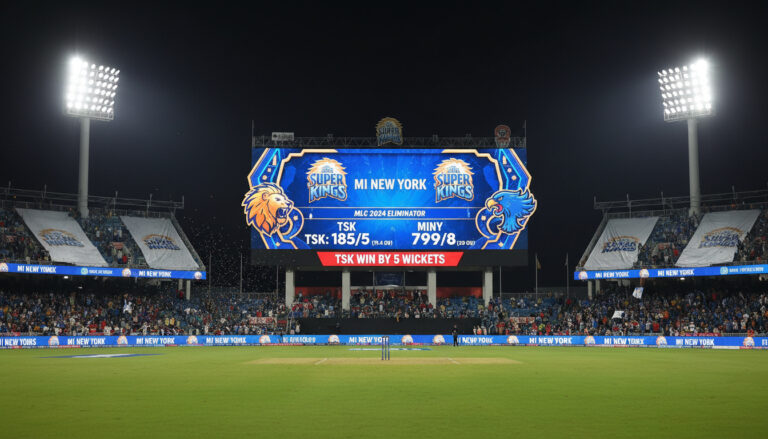 Texas Super Kings vs MI New York Match Scorecard – MLC 2024 Eliminator Result
 Michael McLeod’s Move to KHL: Career, Contract, and What’s Next
