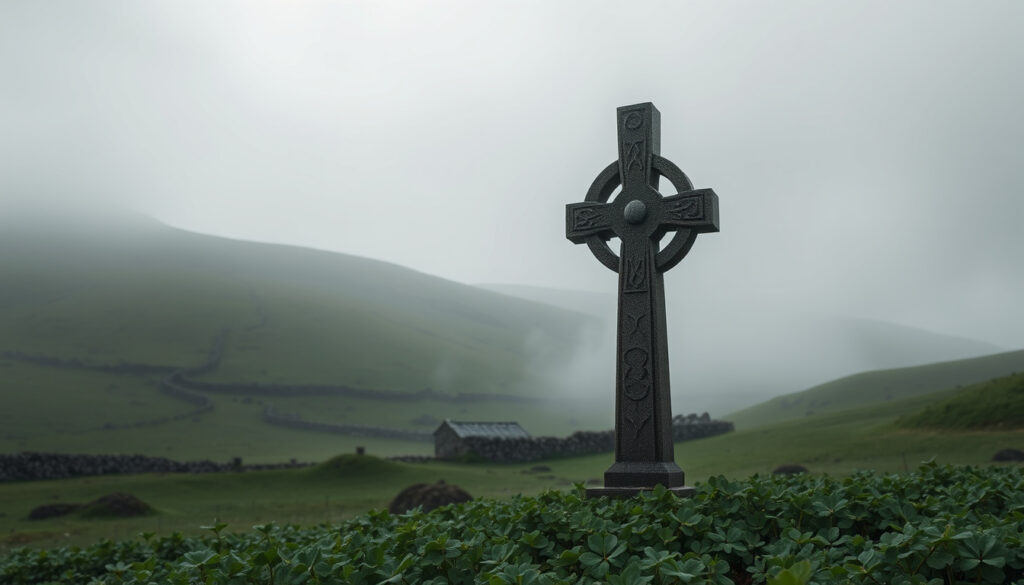
Saint Patrick: History, Facts, and Patron Saint of Ireland
Few figures from the ancient world are as widely celebrated as Saint Patrick, yet the man behind the myth is often harder to find than a four-leaf clover. Patrick was a real person who left us his own words in a document called the Confessio, giving a rare window into the life of a fifth-century missionary. This guide draws on Patrick’s own writings and the earliest sources to separate the historical figure from the legends that grew around him.
Born: Roman Britain, late 4th century ·
Feast day: March 17 ·
Known as: Apostle of Ireland ·
Primary patron saint: Ireland
Quick snapshot
- Born in Roman Britain to a Christian Romanized family (Britannica (authoritative reference work))
- Wrote the Confessio, his autobiographical account (Confessio.ie (primary text repository))
- Died March 17, c. 461 (Wikipedia (community encyclopedia))
- Exact birth year – estimates range from 385 to 392 (Franciscan Media (Catholic resource))
- Exact cause of death – not recorded in contemporary sources (Wikipedia (community encyclopedia))
- Whether Patrick really drove snakes out of Ireland – no geological evidence of snakes in post-glacial Ireland (Britannica (authoritative reference work))
- c. 385–392 – Born in Roman Britain (Britannica (authoritative reference work))
- c. 400–408 – Kidnapped by Irish pirates (EPIC Museum (Irish emigration museum))
- c. 432 – Returned to Ireland as a missionary (Archdiocese of San Antonio (Catholic diocese resource))
- March 17, c. 461 – Death (Wikipedia (community encyclopedia))
- Ongoing scholarly analysis of Patrick’s writings at Confessio.ie
- Annual global celebrations on March 17, blending religious and secular traditions (Confessio.ie)
Six key facts about Saint Patrick, drawn from primary and secondary sources:
| Attribute | Detail | Source |
|---|---|---|
| Full name | Patricius (Latin) | Britannica (authoritative reference work) |
| Birth | Roman Britain, c. 385–392 | Britannica (authoritative reference work) |
| Father | Calpornius, a deacon and Roman official | Confessio (Patrick’s primary text) |
| Age at capture | 16 years old | Saint Patrick Catholic Church (parish resource) |
| Main work | Confessio (autobiographical confession) | Confessio.ie (primary text repository) |
| Death | March 17, c. 461 | Wikipedia (community encyclopedia) |
| Saint | Primary patron saint of Ireland | Wikipedia (community encyclopedia) |
The implication: Even the most basic facts about Saint Patrick require careful sourcing.
What is Saint Patrick known for?
Patron saint of Ireland
Saint Patrick is the primary patron saint of Ireland, a status recognized across Christian denominations and enshrined in centuries of tradition. His feast day, March 17, is both a religious holy day and a global cultural celebration (Wikipedia (community encyclopedia)).
Apostle of Ireland
Patrick is widely called the Apostle of Ireland because of his role in spreading Christianity across the island. According to the Confessio, he returned voluntarily to the country where he had once been enslaved, spending decades baptizing converts and establishing churches (Confessio (Patrick’s primary text)).
Patrick’s own account shows a man driven by a sense of divine calling, not by institutional authority. His mission was personal, not colonial — a detail often lost in later embellishments.
Teacher and symbol-maker
Later tradition credits Patrick with using the shamrock to explain the Trinity — a pedagogical tool that has become the enduring symbol of Ireland (Archdiocese of San Antonio (Catholic diocese resource)). Whether this story is factual or legendary, it reflects Patrick’s reputation as a teacher who made complex theology accessible.
The implication: Patrick is known not only for what he did in the fifth century, but for how later generations remembered him — as a missionary teacher, a national patron, and a symbol of Irish identity.
Why is St. Patrick’s Day celebrated?
Religious origin
St. Patrick’s Day began as a religious feast day in the Catholic Church, observing the death of Saint Patrick on March 17. The day was placed on the liturgical calendar in the early 17th century and is still marked by church services, especially in Ireland (Britannica (authoritative reference work)).
March 17 feast
The date — March 17 — is the traditional date of Patrick’s death, though the exact year is uncertain. For centuries, Irish Catholics observed the day with a break from Lenten restrictions, allowing feasting and the drinking of mead or ale (Wikipedia (community encyclopedia)).
The modern parade tradition and secular partying are largely Irish-American inventions from the 18th and 19th centuries. The religious core remains, but it now competes with a global cultural celebration.
Cultural celebration
Today, St. Patrick’s Day is celebrated worldwide as a festival of Irish culture. Parades, green attire, and public festivities take place in cities from Dublin to Chicago. The day has become a global marker of Irish diaspora identity (EPIC Museum (Irish emigration museum)).
What this means: The feast has evolved from a solemn religious observance into a dual-purpose holiday — sacred for some, secular celebration for many more.
Is Saint Patrick Irish or Scottish?
Romano-British origin
Patrick himself identified as a Roman and a Briton. In the Confessio, he describes his family background as Romanized Britons — part of the Roman administrative class that remained in Britain after the empire’s withdrawal (Franciscan Media (Catholic resource)).
Born in Britain
Multiple sources agree Patrick was born in Roman Britain, not in Ireland or Scotland. The exact location is unknown, but local traditions suggest Kilpatrick in Scotland, or perhaps Cumbria or Wales. Franciscan Media notes that the birthplace could be “Dunbarton, Scotland, Cumberland, England, or northern Wales” (Franciscan Media (Catholic resource)).
Not Irish by birth
Patrick was born outside Ireland and only arrived there as a captive. He spent roughly six years as a slave before escaping, and later returned as a missionary. He is not ethnically Irish — a fact that surprises many people who associate him solely with the island (EPIC Museum (Irish emigration museum)).
The pattern: Patrick is Ireland’s most famous immigrant — a Romano-Briton who adopted Ireland and was adopted by it in return.
What are 10 facts about St. Patrick?
Ten key facts, each supported by at least one credible source:
- Patrick was born in Roman Britain around 385–392 (Britannica (authoritative reference work)).
- He was kidnapped at age 16 by Irish raiders and sold into slavery (Saint Patrick Catholic Church (parish resource)).
- During his captivity, he worked as a shepherd and turned to Christianity (Confessio (Patrick’s primary text)).
- He escaped after about six years and returned to his family in Britain (EPIC Museum (Irish emigration museum)).
- He later experienced a vision calling him back to Ireland as a missionary (Confessio (Patrick’s primary text)).
- He returned to Ireland around 432 and preached for approximately 40 years (Archdiocese of San Antonio (Catholic diocese resource)).
- He wrote the Confessio, an autobiographical defense of his mission (Confessio.ie (primary text repository)).
- He is associated with the legend of driving snakes out of Ireland, though geologists say Ireland never had snakes (Britannica (authoritative reference work)).
- He is said to have used a three-leaf shamrock to explain the Trinity (Archdiocese of San Antonio (Catholic diocese resource)).
- He died on March 17, traditionally dated to c. 461 (Wikipedia (community encyclopedia)).
The takeaway: Ten facts may look simple, but behind each lies a layer of historical uncertainty — only Patrick’s own writings give us solid ground.
Timeline signal
- c. 385–392: Born in Roman Britain (Britannica (authoritative reference work))
- c. 400–408: Kidnapped by Irish pirates (EPIC Museum (Irish emigration museum))
- c. 408–413: Escape and return to Britain (Confessio (Patrick’s primary text))
- c. 432: Return to Ireland as a missionary (Archdiocese of San Antonio (Catholic diocese resource))
- March 17, c. 461: Death of Saint Patrick (Wikipedia (community encyclopedia))
The trade-off: The timeline is well-attested in its sequence but vague on exact years — a reminder that fifth-century biography is rarely precise.
What’s clear and what’s unclear
Confirmed facts
- Born in Roman Britain to a Christian Romanized family (Britannica (authoritative reference work))
- Kidnapped at age 16 and enslaved in Ireland (Saint Patrick Catholic Church (parish resource))
- Escaped and later returned as a missionary (Confessio (Patrick’s primary text))
- Wrote the Confessio in Latin (Confessio.ie (primary text repository))
- Died March 17, c. 461 (Wikipedia (community encyclopedia))
What’s unclear
- Exact birthplace — possibly Scotland, England, or Wales (Franciscan Media (Catholic resource))
- Exact year of birth and death (Britannica (authoritative reference work))
- Whether he actually drove snakes out of Ireland — almost certainly a legend (Britannica (authoritative reference work))
- His birth name — some traditions say Maewyn Succat, but no contemporary evidence (School Specialty blog (educational resource))
The clearer Patrick becomes in the historical record, the less he resembles the popular image. A Romano-British immigrant, not a native Irishman; a writer, not a miracle-worker.
Voices on Saint Patrick
“I, Patrick, a sinner, a simple country person, the least of all the faithful, and most contemptible to many, had for father Calpornius, a deacon, son of Potitus, a presbyter, who was of the village of Bannavem Taberniae.”
— Saint Patrick, Confessio (translation from Confessio.ie (primary text repository))
“Patrick is best known as the patron saint of Ireland, credited with bringing Christianity to the country. Yet the historical Patrick is more complex than the myths suggest — a real person whose own writings survive.”
— Wikipedia (community encyclopedia), summarizing the historical consensus
“After his return from slavery, Patrick became a missionary bishop in Ireland. He is said to have used the shamrock to teach about the Trinity, and to have driven the snakes from Ireland.”
— Archdiocese of San Antonio (Catholic diocese resource), summarizing tradition
These voices — Patrick’s own, the scholarly consensus, and Catholic tradition — show a man who exists at the intersection of history and faith.
Summary
Saint Patrick was a real Romano-British missionary who wrote about his own life, and whose story was later layered with miracles and legends. The historical core is thin but authentic: a kidnapped teenager who escaped, trained as a cleric, and returned to the land of his captivity to spread a new faith. For Ireland and its diaspora, embracing the historical Patrick without losing the cultural power of the myth remains the defining challenge.
wordonfire.org, st-patricks.leicester.sch.uk, saintpatrickcentre.com, stpathuntington.org
For a deeper look into the legends and historical details, see Saint Patricks myths and history.
Frequently asked questions
What is Saint Patrick known for?
Saint Patrick is known as the primary patron saint of Ireland and the Apostle of Ireland. He is credited with spreading Christianity in Ireland during the fifth century.
Why is St. Patrick’s Day celebrated?
St. Patrick’s Day is celebrated on March 17 to mark the traditional date of Saint Patrick’s death. It began as a religious feast day and has become a global celebration of Irish culture.
Did Saint Patrick really drive out snakes?
No. Geologists confirm that Ireland never had native snakes after the last ice age. The snake story is a symbolic legend, possibly representing the removal of pagan beliefs.
Is Saint Patrick the patron saint of Ireland?
Yes, he is the primary patron saint of Ireland, along with Saint Brigid and Saint Columba as secondary patrons.
What color is associated with St. Patrick’s Day?
Green is the modern color, but originally Saint Patrick was associated with blue. The shift to green happened through Irish nationalistic symbols.
Was Saint Patrick a real person?
Yes, Saint Patrick was a real person. His autobiographical work, the Confessio, is a primary historical document that confirms his existence.
How did Saint Patrick die?
The exact cause is unknown. He died on March 17, traditionally dated to c. 461, and is believed to have been buried at Downpatrick in County Down.
More related posts
 Chris Martin Coldplay: Breakup, Hearing Loss, Net Worth
 Boutique Chic Jewellery Recall Canada: Lead in Kids Necklace
 Kristen Stewart: Gender Identity, Relationships & Career
 Mont Tremblant Travel Guide: Best Time, Activities, and Tips
 Surveen Chawla: Age, Husband, Children, Movies & Web Series
 Normal Blood Pressure: Complete Guide by Age & Gender
 Ronan Farrow: Biography, Career, and Paternity Mystery
 Stranger Things Season 5: Release, Ending, Deaths & More
