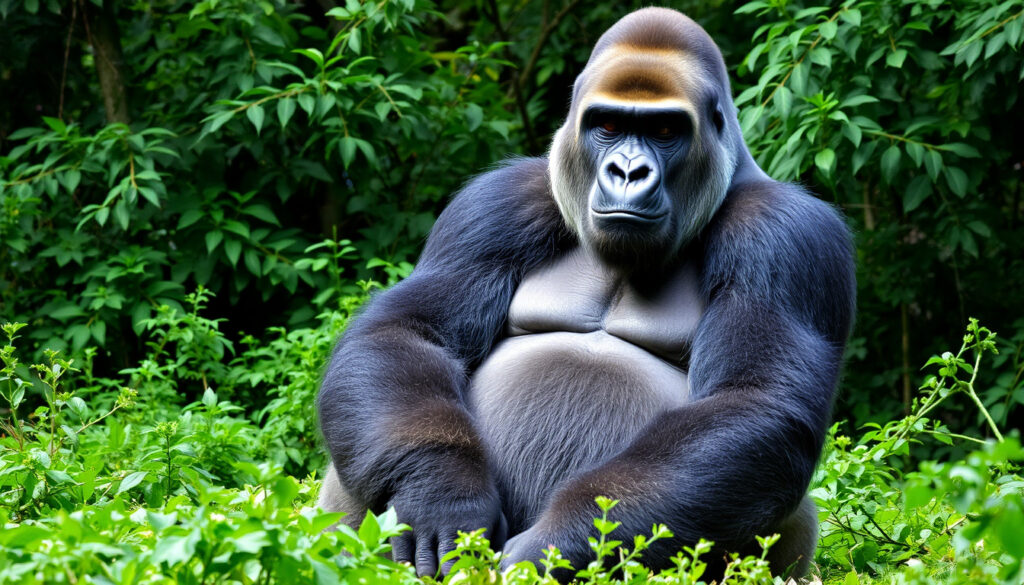
Silverback Gorilla Facts: Strength, Diet, and Behavior
There’s a popular image of the silverback gorilla as a raging titan, chest‑beating and charging at anything that moves. Yet spend a few minutes watching actual footage, and a different character emerges—one that’s far more deliberate, protective, and surprisingly gentle. This guide separates fact from fiction, using the latest research to show what the world’s strongest primate is really like: how it behaves, what it eats, and how you should greet one if you ever meet it in the wild.
Maximum weight: 400 lbs (180 kg) ·
Height (standing): 5.5 to 6 feet (1.7–1.8 m) ·
Pound-for-pound strength estimate: Up to 10 times body weight ·
Diet: Primarily herbivorous (leaves, stems, fruit) ·
Average lifespan in wild: 35–40 years ·
Social structure: One dominant silverback per troop
Quick snapshot
- Largest living primate: adult males weigh 300–485 lbs (Gorillas Facts)
- Primarily herbivorous — over 90% plant matter (Gorillas Facts)
- Strength is significantly greater than a human’s, though exact multipliers vary (Gorilla Safari Experts)
- Use non-aggressive displays (chest beating, roars, rushes) to resolve conflict (Gorillas Facts)
- Exact pound-for-pound strength ratio compared to chimpanzees or grizzly bears hasn’t been scientifically measured (Africa Safaris)
- Whether a solitary human with no tools could ever subdue a silverback is hypothetical and unverified (Gorilla Safari Experts)
- The true frequency of insect consumption in the wild is not fully documented (Gorillas Facts)
- Whether silverbacks can bench press 4,000 lbs is based on anecdotal comparisons, not lab tests (Africa Safaris)
- No specific calendar events — silverback behavior is consistent year‑round: daily foraging (6–8 hours), resting, and social interaction (Go Silverback Safaris)
- Growing ecotourism means more human‑gorilla encounters — understanding greeting etiquette and defensive signals is critical for safety (Bwindi Forest National Park)
The table below summarizes key biological stats for the silverback gorilla.
| Attribute | Value |
|---|---|
| Scientific name | Gorilla beringei beringei (mountain), Gorilla gorilla gorilla (western lowland) |
| Average weight (silverback) | 300–400 lbs (136–181 kg) |
| Average height (standing) | 5.5–6.0 ft (1.7–1.8 m) |
| Arm span | Up to 8.5 ft (2.6 m) |
| Lifespan in wild | 35–40 years |
| Diet | Herbivorous; over 90% plant matter |
| Social unit | One dominant silverback per troop |
Are silverback gorillas the strongest gorilla?
Yes — silverbacks are the largest and strongest living primates. A dominant male can weigh over 400 pounds and reportedly lift up to 10 times his body weight in some movements, though these figures come from anecdotal comparisons rather than controlled lab tests (Africa Safaris). To put that in perspective, a silverback’s grip strength has been described as strong enough to bend metal bars in captivity (Africa Safaris).
One widely‑circulated internet claim places a silverback’s bench‑press capacity at roughly 4,000 pounds — a number that comes from safari‑blog extrapolations, not peer‑reviewed science (Africa Safaris). Other sources estimate the gorilla is 4 to 9 times stronger than an average human (Maseke Adventure), and 6 to 8 times stronger than the strongest human (Maseke Adventure).
All the raw strength numbers are estimates, not measurements. For a wildlife enthusiast booking a trek, the real takeaway is that silverbacks are strong enough to be lethal if threatened — but their default is to warn, not attack.
Who would win, 100 men or a silverback gorilla?
This is a common thought experiment. A single silverback has the raw power to inflict severe casualties — one swipe can break bones. But 100 unarmed humans using coordination and basic tactics would likely overwhelm a lone gorilla through sheer numbers (Gorilla Safari Experts). No real fight has ever been documented; the scenario is purely speculative.
Can a human beat a silverback gorilla?
In an unarmed one‑on‑one confrontation, a human has virtually no chance. The strength gap is too wide: a silverback’s bite force exceeds a lion’s, and its muscle mass dwarfs that of any human athlete (Gorillas Facts). The only realistic scenario is one where the human uses tools or distance — and even then, a cornered silverback would be extremely dangerous.
What would win in a fight against a gorilla?
Large predators like a grizzly bear or a saltwater crocodile would likely defeat a silverback due to size, weaponry, and predatory instinct. Among primates, chimpanzees are actually more aggressive and have been known to kill smaller gorilla infants, but an adult silverback is far larger and stronger than any chimp (Gorilla Safari Experts).
Two species, one pattern: the silverback wins by weight class against any primate, but loses to dedicated apex predators.
Silverbacks are built for defense, not offense. Their strength is a deterrent — a biological insurance policy — rather than a weapon they regularly use.
Here’s a quick comparison across species:
| Attribute | Silverback Gorilla | Human (male) | Chimpanzee | Grizzly Bear |
|---|---|---|---|---|
| Weight | 300–485 lbs | 150–200 lbs | 90–120 lbs | 600–900 lbs |
| Estimated strength | 4–10× human | baseline | 1.5–2× human | 2.5–5× human |
| Bite force (psi) | ~1,300 | ~160 | ~700 | ~1,200 |
| Aggression level | Low (defensive) | Variable | High (predatory) | Moderate (territorial) |
| Primary weapon | Strength + canines | Tools / tactics | Teeth + group coordination | Claws + bite |
The silverback sits in a unique niche: strongest of the primates, yet one of the least aggressive large mammals. That paradox is exactly what makes them fascinating — and what travellers need to understand before a trek.
Is silverback gorilla aggressive?
No. Despite the Hollywood image, silverback gorillas are among the most peaceful large mammals. The Gorillas Facts (tier‑2 conservation group) notes that their displays — chest beating, roars, and short rushes — are almost always warnings, not attacks. A charge is the final step in a ritual designed to avoid physical contact.
Most recorded attacks on humans involve habituated gorillas that felt threatened by a person who violated etiquette, such as staring or moving abruptly (Bwindi Forest National Park). Chimpanzees, by contrast, are far more aggressive and have been observed hunting monkeys and even killing members of other chimp groups.
What is the #1 most aggressive animal?
Lists of the world’s most aggressive animals typically include the honey badger, saltwater crocodile, and hippopotamus — animals with high attack frequency or a willingness to fight disproportionately larger opponents (Gorilla Safari Experts). Gorillas never appear near the top. Their low ranking on aggression metrics stems from a simple fact: they only escalate when they have no other choice.
Mistaking a silverback’s size for aggression leads to dangerous overreactions. Guides, rangers, and even the gorillas themselves rely on visitors staying calm — the animal’s “threat” is actually a test of the human’s intent.
The pattern: Strength and aggression are not the same. Silverbacks have the physical capacity to be lethal but choose restraint. In the primate world, that makes them outliers — and a conservation success story.
Do gorillas ever eat meat?
Gorillas are primarily herbivores. Their diet consists of leaves, stems, fruit, and bamboo shoots — over 90% plant matter by volume (Gorillas Facts). They can consume up to 60 pounds of vegetation daily, feeding in the morning and late afternoon (Go Silverback Safaris).
Occasionally they ingest small invertebrates like ants or termites, either accidentally or deliberately — some western lowland gorillas have been observed breaking open termite nests for larvae (Gorillas Facts). But meat from mammals is not part of their wild diet. Zoo gorillas may receive insects as enrichment, but that’s not natural behaviour.
The catch: The “meat‑eating” question often comes from confusion with chimpanzees, which do hunt mammals. Gorillas lack the predatory instinct and the canine‑to‑prey ratio to hunt effectively.
How to greet a gorilla
Meeting a wild mountain gorilla is a privilege, but it demands strict protocol. Gorillas communicate through hoots, grunts, and body language — and humans need to speak that language without words.
According to Bwindi Forest National Park (Uganda’s primary gorilla‑trekking authority), here are the essential steps:
- Stay low and look down. Direct eye contact is interpreted as a challenge. Instead, crouch and angle your head away.
- Do not show your teeth. A wide smile is aggressive in gorilla body language. Keep your mouth closed or gently pursed.
- Make a soft “growl” or deep humming sound. This signals friendliness. Avoid high‑pitched noises.
- Let the silverback make the first move. If he charges, hold your ground and stay calm. Running triggers a chase instinct. The charge is usually a bluff.
- Follow your guide’s lead. Professional gorilla trackers know the troop’s body language. They will tell you when to approach and when to back away.
The Dian Fossey Gorilla Fund (tier‑2 primate research organisation) emphasises that a “play face” — relaxed open mouth, no tension — is a positive sign. If you see it, you’ve likely passed the greeting test.
How do you say “hi” in gorilla?
There’s no single word. Gorillas use a deep, soft “grunt” or “growl” accompanied by submissive body posture (crouching, avoiding eye contact). Mimicking that sound calmly can reassure a silverback that you are not a threat.
The trade‑off: Proper greeting is not about being clever — it’s about showing respect for a creature that could seriously injure you but chooses not to. That mutual trust is the foundation of successful ecotourism.
The same traits that make silverbacks physically intimidating — size, muscle, bite force — are exactly what let them avoid fights. Their strength gives them the luxury of peace.
Confirmed facts
- Silverback gorillas are the largest living primates (Gorillas Facts).
- They are primarily herbivores (over 90% plant matter) (Gorillas Facts).
- Their strength is significantly greater than a human’s (Gorilla Safari Experts).
- They use non‑aggressive displays (chest beating, roars) to resolve conflict (Gorillas Facts).
What’s still unclear
- Exact pound‑for‑pound strength compared to chimpanzees or grizzly bears isn’t scientifically measured (Africa Safaris).
- Whether a solitary unarmed human could ever subdue a silverback is hypothetical and unverified (Gorilla Safari Experts).
- The true frequency of insect consumption in the wild is not fully documented (Gorillas Facts).
- The 4,000‑lb bench‑press claim comes from safari‑blog extrapolations, not peer‑reviewed science (Africa Safaris).
What experts say about silverback gorillas
“The silverback is the epitome of a gentle giant — he leads by example, not by violence.”
— Gorilla Experts, Gorilla Fund (tier‑2 primate conservation organisation)
“Dian Fossey documented countless hours of silverback behaviour, emphasising their protective nature and gentle interactions with family members. A charge is almost always a bluff.”
— Primatologist Dian Fossey (as reported by Gorillas Facts)
“When you greet a mountain gorilla, crouch, avoid staring, and mimic calm vocalisations. The silverback is testing your intentions — if you stay submissive, he accepts you.”
— Virunga National Park ranger (as reported by Bwindi Forest National Park)
For anyone planning a mountain gorilla trek in Uganda or Rwanda, the choice is clear: respect the silverback’s space, follow the greeting protocol, and you’ll witness one of the most powerful yet peaceful animals on Earth — without ever needing to test his strength.
youtube.com, johansiggesson.com, youtube.com, youtube.com, reddit.com, reddit.com
For those who want to dive deeper into the biology of these powerful primates, check out this detailed guide on silverback gorilla facts covering size, strength, and behavior.
Frequently asked questions
How long do silverback gorillas live?
In the wild, silverback gorillas live 35 to 40 years on average. Captive gorillas may live into their 50s due to veterinary care and consistent nutrition (Gorillas Facts).
Where do silverback gorillas live?
Mountain gorillas (Gorilla beringei beringei) are found in the Virunga Mountains of Rwanda, Uganda, and the Democratic Republic of Congo, as well as Bwindi Impenetrable Forest in Uganda (Bwindi Forest National Park). Eastern lowland gorillas inhabit lowland forests of eastern DRC.
How many silverback gorillas are left in the wild?
The mountain gorilla population is estimated at about 1,000 individuals. Eastern lowland gorillas number fewer than 5,000, and both subspecies are classified as critically endangered (Gorillas Facts).
What is the difference between a silverback and a blackback gorilla?
A silverback is an adult male (usually 12+ years) with a silver‑grey saddle of hair on its back. A blackback is a younger adult male (8–12 years) that has not yet developed the silver patch and is subordinate to the dominant silverback (Gorillas Facts).
How do silverback gorillas protect their troop?
The silverback leads the group, mediates disputes, and decides when to move. Against threats, he uses chest beating, vocal roars, and bluff charges. Actual physical combat is rare and typically reserved for rival silverbacks (Gorillas Facts).
Can silverback gorillas climb trees?
Yes, but adult silverbacks are heavy (up to 400+ lbs) and usually stay on the ground. Younger gorillas and females climb more often for fruit or play. Silverbacks will climb if needed, but prefer terrestrial travel (Go Silverback Safaris).
Are silverback gorillas endangered?
Yes. Mountain gorillas are endangered, with around 1,000 left. Eastern lowland gorillas are critically endangered. Western lowland gorillas are also critically endangered, but their population is larger. Habitat loss, poaching, and disease remain the primary threats (Gorillas Facts).
More related posts
 Tipo de Cambio Dolar Canadiense a Peso Mexicano – Current Rate 12.8186
 Esha Deol Divorce: Why She Split From Bharat Takhtani
 Boutique Chic Jewellery Recall Canada: Lead in Kids Necklace
 Christopher Lee: War, Myths, and Legacy | Full Biography
 Arthur Fils: Bio, Age, Parents, Ethnicity, Injury & More
 Cast of Point Break (1991): Full List, Trivia, Behind-the-Scenes
 Danielle Smith: Alberta Premier Biography and Facts
 Is Tomato a Fruit or Vegetable – 1893 Supreme Court Ruling
