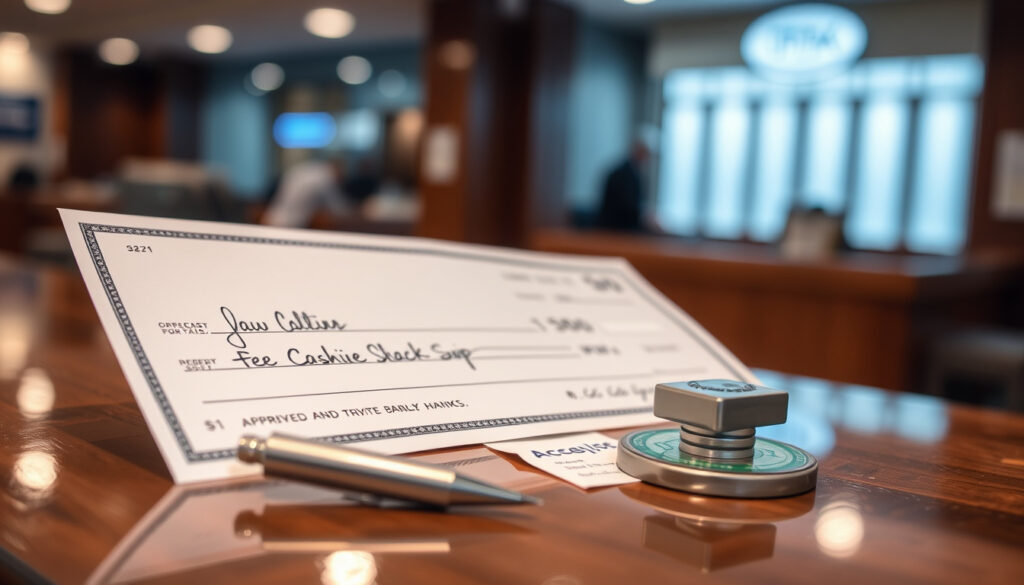
What Is a Cashier’s Check? Fees, Pros, Cons, and How to Get One
You’ve probably been handed a cashier’s check during a big transaction — a home purchase, a car sale — and been told it’s as good as cash, but the fine print around fraud and bank holds is something sellers and buyers rarely hear about until it matters. This guide breaks down what a cashier’s check actually is, how to get one, the hidden risks, and how it stacks up against alternatives like certified checks and money orders.
Average fee: $10–$15 per check · Funds availability: Typically next business day after deposit · Maximum amount: Varies by bank; many have no stated maximum · Common use cases: Real estate, car purchases, large peer-to-peer transactions
Quick snapshot
- Cashier’s checks are drawn on the bank’s own funds, not the customer’s (Citizens Bank (retail banking))
- Banks must make funds available by the next business day under Regulation CC (OCC Bulletin 2007-2 (federal regulator))
- Fake cashier’s checks are a common scam vehicle, especially in overpayment schemes (OCC Bulletin 2007-2 (federal regulator))
- Exact hold periods for large cashier’s checks vary widely by bank policy
- The prevalence of cashier’s check fraud in major transactions is not centrally tracked
- The effectiveness of independent verification in preventing fraud is not fully quantified
- The long-term trend in cashier’s check usage relative to digital payments is uncertain
- The specific security features that distinguish genuine checks are not standardized across banks
- Funds from a genuine cashier’s check available next business day; high-value checks may face additional reviews (KeyBank (consumer banking))
- Digital payment alternatives (wire transfers, ACH, real-time payments) are growing but still less common for high-value peer-to-peer deals
- Regulatory scrutiny on check fraud is expected to intensify, especially with AI-generated counterfeit checks
The table below summarizes the essential attributes of a cashier’s check.
| Attribute | Details |
|---|---|
| Issuer | Bank or credit union |
| Funding source | Bank’s own funds (customer pays upfront) |
| Typical fee | $10–$15 |
| Maximum amount | Varies; many banks set no upper limit |
| Availability of funds after deposit | Next business day (subject to hold) |
| Common uses | Real estate closings, car purchases, earnest money deposits |
What is a cashier’s check?
A cashier’s check is a check issued by a bank and drawn on the bank’s own funds, not the customer’s personal account. When you buy one, the bank immediately debits your account or takes cash upfront, then prints a check signed by a bank representative — usually a teller or cashier. Because the bank is the payer, the check cannot bounce as long as it is genuine. This is why sellers in high-value transactions — real estate agents, car dealers, title companies — often demand a cashier’s check instead of a personal check.
How does a cashier’s check work?
- The bank verifies your account or receives payment for the check amount plus any fee.
- Funds are moved from your account to the bank’s own account, guaranteeing payment.
- The check is printed with the bank’s routing number and account number, plus the recipient’s name and amount.
- You hand the check to the payee, who deposits it like any other check.
One key detail: the bank’s guarantee only holds if the check is authentic. Counterfeit cashier’s checks — copies printed on ordinary paper with fake bank details — are a well-documented scam vector, as the Office of the Comptroller of the Currency (OCC) (federal bank regulator) warned as early as 2007.
Who issues a cashier’s check?
Any insured bank or credit union can issue cashier’s checks. Some online-only banks offer them by mail, but most require an in-person visit to a branch. Credit unions typically call them “official checks” or “teller’s checks.” The issuing institution is the one whose name appears on the check — so you cannot get a cashier’s check written by a bank where you don’t have an account or an ability to pay in cash.
The implication: The guarantee of a cashier’s check is only as strong as the verification process; without independent confirmation, sellers risk fraud.
How do you obtain a cashier’s check?
Getting a cashier’s check is straightforward if you have a bank account and a government-issued ID. Here are the concrete steps and requirements, backed by what banks expect.
What do I need to bring to get a cashier’s check?
- Valid photo ID (driver’s license or passport)
- Exact amount in your account (if paying from your account) or cash/money order
- Recipient’s full name — the check is typically made out to one person or business
- The purpose, if your bank asks (some require a memo line)
Citizens Bank (retail banking) notes that you may also need your account number and the branch you normally use, though many banks issue checks to any customer on the spot.
Can I get a cashier’s check without a bank account?
Yes, but options are limited. Some banks will issue a cashier’s check to a non-customer if you bring cash. However, policies vary widely — many national banks require an account relationship. A simpler alternative for non-customers is a money order (up to $1,000) or using a wire transfer service. ValidAdvantage (fraud prevention specialists) warn that non-customer checks are also harder to verify, increasing fraud risk for both parties.
Banks charge $10–$15 per check, and that fee is non-refundable — even if you lose the check or change your mind. Always confirm the amount and recipient before the bank prints it.
The catch: While obtaining a cashier’s check is straightforward, the fees and non-refundability mean you should be certain of the transaction before purchasing.
What is the downside of a cashier’s check?
Despite their reputation as “guaranteed funds,” cashier’s checks come with real drawbacks — especially when fraudsters or bank hold policies enter the picture.
Are cashier’s checks safe from fraud?
- Fake cashier’s checks are used in overpayment scams, lottery scams, and mystery shopper schemes.
- Fraudsters often send a check for more than the sale price and ask you to wire the excess — a classic red flag flagged by the OCC (federal bank regulator).
- Counterfeit checks may lack security features like microprinting, watermarks, or bank logos. ValidAdvantage (fraud prevention specialists) note that blank payee lines or mismatched bank details are common clues.
Can a cashier’s check be canceled?
If you lose a cashier’s check, canceling it is not simple. Banks typically require you to wait 30 to 90 days before they will issue a refund, and only after you sign an indemnity bond. If the check was already deposited, you cannot stop payment. The USSFCU (credit union security center) explains that once a victim spends money from a fake cashier’s check, they are personally liable for the loss when the fraud is discovered.
A cashier’s check offers strong payment assurance for legitimate transactions, but the same guarantee makes it a weapon for scammers. Sellers assume the check is good — but if it’s fake, the loss falls on them, not the bank.
What this means: The security of a cashier’s check cuts both ways — it offers certainty for legitimate transactions but also makes it a prime tool for fraud.
Cashier’s check vs. money order vs. certified check: what’s the difference?
Three instruments, three funding sources. One pattern: the more the bank guarantees, the higher the fee and the stronger the security. Here’s the breakdown.
| Feature | Cashier’s check | Certified check | Money order |
|---|---|---|---|
| Funds come from | Bank’s own account | Your personal account (bank guarantees payment) | Your cash or debit at time of purchase |
| Typical fee | $10–$15 | $0–$15 (sometimes free) | $1–$5 |
| Maximum amount | Usually no cap (bank limits vary) | No cap (depends on account balance) | $1,000 per order (multiple orders allowed) |
| Where to buy | Bank or credit union | Bank or credit union | Post office, grocery stores, Walmart, check-cashing outlets |
| Fraud risk | High (counterfeit checks common) | Lower (bank verifies signature) | Lower (less used in large scams) |
| Best for | Real estate, cars, large peer-to-peer payments | Moderate-sized payments ($1k–$10k) where seller knows buyer | Small payments, mail orders, person-to-person loans |
KeyBank (consumer banking) explains that certified checks are drawn on your personal account with a bank guarantee, whereas cashier’s checks skip your account entirely. For amounts under $1,000, a money order is cheaper and nearly as safe if you keep the receipt.
Which is safer: cashier’s check or certified check?
Both offer similar security because a bank backs them. However, certified checks are slightly harder to counterfeit because the bank physically marks the check and verifies your signature. Citi (retail banking) notes that cashier’s checks are more common for large transactions, but that also makes them a bigger target for fraudsters.
When should I use a money order instead of a cashier’s check?
Use a money order when the amount is under $1,000, you don’t have a bank account, or you need a cheap, reliable payment. Money orders don’t expose your bank account number, so they’re safer for unknown parties. The trade-off: no bank guarantee, so the recipient must wait for the money order to clear, which can take weeks if purchased from a non-bank issuer.
The pattern: The choice between these instruments depends on the transaction size and the level of trust, with cashier’s checks reserved for the largest and most formal deals.
Aren’t cashier’s checks supposed to be honored immediately?
By law, banks must make the first $5,525 of a cashier’s check deposit available the next business day under Regulation CC. But that doesn’t mean the check is fully cleared. Banks can place longer holds if they suspect fraud or if the check is from an unfamiliar bank.
How long does a cashier’s check take to clear?
For a genuine check from a well-known bank, funds are usually available the next business day. For large amounts — say $30,000 — the bank may hold the entire amount for five to seven business days while it verifies the check with the issuing institution. ValidAdvantage (fraud prevention specialists) recommend always calling the issuing bank using a number you look up independently, not the one printed on the check, to confirm its authenticity.
Why might a bank delay clearing a cashier’s check?
- The check is from a bank the depositor’s bank does not recognize.
- The check amount is unusually high for the account history.
- The depositor has a history of bounced checks or fraud claims.
- Security features on the check look suspicious (blurry logo, missing watermark).
The OCC (federal bank regulator) emphasizes that depositary banks face reputation risk when they release funds on a fraudulent check — so delays are a feature, not a bug. For consumers, the lesson: never spend money from a cashier’s check until your bank confirms it has cleared, not just been made available.
“A cashier’s check provides maximum assurance for payment because the bank guarantees the funds, but if the check is counterfeit, the depositor — not the bank — bears the loss.”
Citi (retail banking)
“Fraudsters send cashier’s checks for more than the agreed amount and pressure the victim to wire the difference. That’s an unmistakable red flag.”
USSFCU (credit union security center)
Confirmed facts vs. what’s still unclear
Confirmed facts
- Cashier’s checks are paid from the bank’s funds, not the customer’s account.
- Banks must make funds available by the next business day under Regulation CC.
- Fake cashier’s checks are a common scam vehicle, especially in overpayment schemes.
- Victims who spend money from fake checks are personally liable for the loss.
What’s still unclear
- Exact hold periods for large cashier’s checks vary widely by bank policy and are rarely published.
- The true prevalence of cashier’s check fraud in major transactions is not centrally tracked by any government agency.
- The effectiveness of independent verification in preventing fraud is not fully quantified.
- The long-term trend in cashier’s check usage relative to digital payments is uncertain.
- The specific security features that distinguish genuine checks are not standardized across banks.
The implication: The gaps in data mean consumers must rely on precautionary measures rather than regulatory guarantees.
Pros and cons of using a cashier’s check
Upsides
- Guaranteed funds if the check is genuine — sellers can trust it.
- Widely accepted for large payments (real estate, vehicles, auctions).
- No risk of a personal check bouncing.
- Funds are typically available quickly (next business day).
Downsides
- Vulnerable to counterfeiting — fake checks look convincing.
- Difficult to cancel if lost or stolen (30–90 day wait for refund).
- Banks may place holds on large checks, delaying access to funds.
- Fees ($10–$15) are non-refundable even if the check is never used.
The pattern: The pros and cons highlight that a cashier’s check is a double-edged sword — it provides payment assurance but also introduces fraud vulnerability.
Step-by-step: How to get a cashier’s check
- Visit your bank branch (online requests are rare; some banks offer by mail but take days).
- Bring a valid government-issued ID — driver’s license or passport.
- Provide the exact payee name and amount — the check will be printed with these details.
- Pay for the check — the bank debits your account or accepts cash. Include the fee.
- Review the check before leaving — confirm the payee name, amount, and bank logo are correct.
- Keep the receipt — you’ll need it if the check is lost or you need to track it.
Citizens Bank (retail banking) recommends asking for a copy of the check for your records. Some banks also offer a phone verification system that lets the recipient confirm the check’s authenticity.
The implication: For consumers in the U.S., the safest path when dealing with a cashier’s check is to treat it like a certified check — verify independently before releasing goods, and never spend the funds until the bank confirms the check has cleared fully.
For buyers and sellers in the United States, the choice between a cashier’s check, a certified check, and a money order comes down to transaction size and trust. A cashier’s check is the gold standard for large purchases where both parties need certainty — but only if you verify it. The trade-off for that certainty is the risk of fraud and the hassle of replacement if lost. For smaller amounts, a money order or digital payment saves money and avoids the same headache.
Frequently asked questions
Is a cashier’s check the same as a bank check?
Not exactly. A “bank check” is a general term that includes both cashier’s checks and certified checks. A cashier’s check is drawn on the bank’s own funds; a certified check is drawn on your account but guaranteed by the bank.
Can I get a cashier’s check online?
Some online banks offer cashier’s checks by mail, but most require an in-person visit to a branch for same-day issuance. Online requests typically take 3–5 business days to arrive.
What happens if a cashier’s check is lost?
You must contact the issuing bank. They will place a stop payment and require you to wait 30–90 days before issuing a refund or replacement. You may also need to sign an indemnity bond.
Do cashier’s checks expire?
Cashier’s checks never legally expire, but banks may refuse to honor them after 90 days. The issuing bank can still reissue the check upon request, often with a small fee.
Are cashier’s checks refundable?
If you cancel before the check is cashed, you can get a refund after the bank’s waiting period (usually 30–90 days). The issuance fee is non-refundable.
Can a cashier’s check bounce?
If the check is genuine, it cannot bounce because the bank is the payer. However, if it’s counterfeit, it will be returned unpaid after the bank discovers the fraud.
Is a cashier’s check better than a wire transfer?
For large transactions, wire transfers are faster (same-day) and less vulnerable to counterfeiting. Cashier’s checks offer a paper trail and can be easier for individuals who don’t have a bank account suitable for wire transfers.
For more on financial instruments, check our guides on What Is a Reverse Mortgage? How It Works, Pros & Cons and ETF vs Mutual Fund – Complete 2025 Comparison Guide.
More related posts
 Sheikha Mahra: Instagram Divorce, Net Worth & Polygamy
 Longest Word in English – 45-Letter Dictionary Record
 Sanjay Dutt: Biography, Health, Legal Troubles, and Personal Life
 Lee Harvey Oswald: Capture, Wife, Funeral & Unanswered Questions
 Signs That Pneumonia Is Improving: Key Recovery Indicators
 Connie Britton Biography: Age, Net Worth, and Career Facts
 How to Make French Toast: Step-by-Step Guide with Healthy Tips
