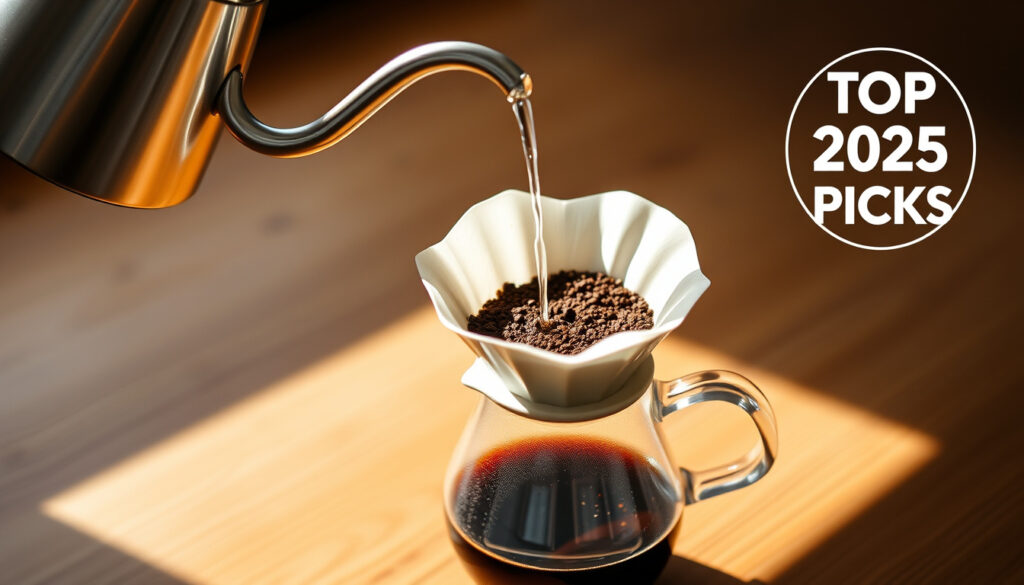
Pour Over Coffee Maker – Best 2025 Picks and Guides
Pour over coffee makers have earned a dedicated following among home brewers who seek greater control over flavor extraction. Unlike automatic drip machines, these manual brewers allow users to adjust variables such as water flow rate, temperature, and pour pattern—elements that significantly influence the final cup character. The market offers options ranging from budget-friendly drippers under $30 to premium glass carafes exceeding $60, each designed to serve different brewing volumes and skill levels.
This guide examines the leading pour over coffee makers available in 2025, comparing their designs, capacities, and ideal use cases. Whether someone is new to manual brewing or looking to upgrade an existing setup, understanding the distinctions between cone-shaped and flat-bottom brewers can help narrow the selection to a device that matches specific preferences and workflow needs.
What Is the Best Pour Over Coffee Maker?
Selecting the ideal pour over coffee maker depends heavily on brewing volume, desired flavor profile, and willingness to develop technique. Three models consistently emerge as top performers in expert reviews: the Hario V60, Kalita Wave, and Chemex Classic.
For single cups with bright, complex flavors, choose the Hario V60. For consistent, beginner-friendly results, the Kalita Wave excels. For brewing larger batches with exceptional clarity, the Chemex Classic delivers.
| Model | Price Range | Capacity | Material | Best For |
|---|---|---|---|---|
| Hario V60 | $20–30 | 1–2 cups | Ceramic/Plastic | Finesse, light roasts |
| Kalita Wave | $25–40 | 1–2 cups (155/185 sizes) | Stainless/Ceramic | Consistency, beginners |
| Chemex Classic | $45–65 | 3–8 cups | Glass | Big batches, clean flavor |
| OXO Brew (Auto) | $199 | Varies | Plastic/Metal | Automation, precision |
| Bodum Pour Over | $15–25 | 1–4 cups | Glass/Plastic | Budget, value seekers |
Key Factors When Choosing a Pour Over Maker
- Flavor profile: Cone brewers like the V60 produce brighter, more nuanced cups; flat-bottom designs like the Kalita deliver even extraction with stronger body.
- Brewing volume: Single-serve setups work well for individuals; larger households benefit from Chemex capacity.
- Technique requirement: The V60 demands more precision in pouring angle and speed, while the Kalita forgives minor variations.
- Material durability: Glass offers clean taste but fragility; ceramic provides heat stability; stainless steel prioritizes longevity.
- Budget constraints: Manual brewers under $50 can compete with premium options when paired with proper technique.
Manual pour over brewers in the $20–40 range—specifically the Hario V60 and Kalita Wave—account for the majority of top-performing cups in blind taste tests, according to reviews from Tom’s Guide and GetFlask.
How Do You Use a Pour Over Coffee Maker?
Mastering pour over technique involves controlling water temperature, coffee-to-water ratio, grind size, and pour pattern. While each brewer has specific nuances, the foundational steps remain consistent across most manual drippers.
Step-by-Step Brewing Process
- Prepare water: Bring water to 195–205°F, then let it rest off the boil. Too hot water extracts bitter compounds; too cool yields sour, underdeveloped flavors.
- Rinse the filter: Place a paper filter in the dripper and pour hot water through it. This removes papery taste and preheats the brewer.
- Measure coffee: Use a 1:16 ratio as a starting point (20g coffee to 320g water). Adjust to 1:15 for a stronger cup or 1:17 for milder results.
- Grind appropriately: Set the grinder to medium-coarse, resembling kosher salt in texture. The V60 benefits from a slightly finer grind for complex notes; Chemex and Kalita perform better slightly coarser to prevent clogging.
- Bloom the coffee: Pour twice the coffee weight in water over the grounds (e.g., 40g water for 20g coffee). Allow 30–45 seconds for CO2 to release and grounds to saturate.
- Pour in spirals: Continue adding water in slow, circular motions. The V60 requires 30–45 seconds total for the main pour; Kalita and Chemex benefit from steadier 2–3 minute pours.
Pouring too quickly or unevenly causes channeling, where water rushes through specific areas of the grounds. This results in uneven extraction, producing both bitter and sour notes in the same cup.
Material Considerations
Glass brewers like the Chemex impart the cleanest flavor but lose heat rapidly. Ceramic drippers such as the V60 maintain stable temperatures but add weight and fragility. Plastic versions reduce costs but may retain odors over extended use. Stainless steel options like the Kalita 155 offer durability for travel but carry a slight metallic taste until seasoned properly.
Water quality directly impacts brewing results, making filtration a worthwhile consideration for pour over enthusiasts. Exploring water filtration options for the home can reveal how mineral content and purity affect flavor extraction and overall cup character.
Pour Over Coffee Maker vs Drip Coffee Maker: Key Differences
The fundamental distinction between pour over and automatic drip coffee makers lies in user control versus convenience. Understanding these differences helps buyers align their choice with lifestyle priorities.
Flavor and Extraction Comparison
Pour over brewers, particularly cone-shaped designs like the Hario V60, extract brighter, more complex flavors through manual manipulation of pour speed and pattern. The Specialty Coffee Association’s brewing standards highlight that water dispersion control significantly affects acid retention and sweetness development.
Drip machines like the Ratio Four and Breville Precision offer café-quality consistency without demanding technique. The OXO Brew uses a “Rainmaker” dispersal system that mimics manual pouring, achieving similar results at a higher price point.
Head-to-Head Performance
Flat-bottom brewers such as the Kalita Wave outperform cone designs in extraction evenness during controlled tests, according to GetFlask. This makes them a practical middle ground between manual finesse and automated reliability.
- Pour over advantages: Customizable flavor, lower equipment cost, manual brewing ritual, less energy consumption.
- Drip machine advantages: Consistent results without practice, faster brew time, hands-off operation, larger batch capacity.
- Pour over drawbacks: Learning curve, attention required during brew, single-cup limitations on most models.
- Drip machine drawbacks: Higher initial cost for quality units, less flavor nuance, greater energy usage.
What Size Pour Over Coffee Maker Do You Need?
Capacity requirements vary based on household size, daily consumption, and whether the brewer serves as a primary or secondary method. Matching size to needs prevents both underserving and overcomplication.
Single-Serve Options
Most pour over drippers work optimally at 1–2 cup volumes. The Hario V60 in size 02 accommodates roughly 20g of coffee, producing a single substantial serving. The Kalita Wave comes in 155 (single cup) and 185 (two cup) sizes, allowing flexibility without switching devices. These smaller formats suit individuals who prioritize freshness and control over volume.
Multi-Serving Setups
The Chemex Classic spans 3–8 cup capacities, making it the primary choice for households or gatherings. Its thick paper filters and large format require adjusted pour timing but reward users with exceptionally clear, clean-tasting coffee. The trade-off involves counter space and heat retention challenges inherent to larger glass vessels.
Cleaning and Maintenance
Daily maintenance for most pour over makers involves simply rinsing the dripper and discarding the paper filter along with grounds. The Kalita and V60 accumulate minimal residue due to their design, while the Chemex benefits from occasional deeper cleaning. Tom’s Guide recommends soaking in a 1:10 water-to-vinegar solution for 30 minutes weekly for ceramic and stainless steel brewers, though glass Chemex units should avoid dishwasher cleaning to prevent thermal shock.
- Daily rinse: Immediately after brewing, rinse the dripper and server with hot water.
- Weekly soak: Use diluted vinegar or baking soda solution for stubborn oils.
- Storage: Ensure completely air-dried before storing; damp filters promote mold.
- Reusable filters: Metal filters reduce waste but alter flavor by allowing oils to pass through.
Temperature precision applies beyond beverage preparation. The cotelette de porc au four guide demonstrates how consistent heat management elevates cooking results, paralleling the attention required for optimal coffee extraction.
The Evolution of Pour Over Brewing
Pour over brewing traces its roots to Germany, where inventor Melitta Bentz patented the first paper filter coffee maker in 1908. Her design solved a persistent problem: grounds slipping into the cup. The cone-shaped filter configuration she established remains the foundational architecture for most manual drippers today.
Japanese manufacturers later refined the craft, with Hario introducing the V60 in 2004 featuring spiral ridges and a larger hole diameter. This design accelerated flow rates and emphasized brightness in the cup. Meanwhile, Kalita brought flat-bottom geometry to mainstream attention, addressing extraction consistency through three drainage holes rather than a single aperture.
The specialty coffee movement of the 2010s propelled manual brewing into popular consciousness, with Third Wave cafes featuring pour over bars as demonstrations of craft and expertise. This period saw prices stabilize and quality increase across manufacturers, making professional-grade home brewing accessible below $50.
- 1908: Melitta Bentz patents the first paper filter cone in Germany.
- 1930s–1940s: Chemex introduces the hourglass glass carafe design.
- 2004: Hario releases the V60 with spiral ridges and precision geometry.
- 2008: Kalita Wave launches flat-bottom design for even extraction.
- 2010s: Specialty coffee boom popularizes manual brewing worldwide.
- 2020s: Automatic pour over brewers like OXO and xBloom enter the market.
Understanding What Experts Know—and What Remains Unclear
The Specialty Coffee Association provides widely adopted brewing ratios and water temperature standards. Cone-shaped brewers like the V60 generally produce brighter cups; flat-bottom designs like the Kalita deliver more consistent extraction. Manual pour over methods use less energy than electric drip machines.
The “best” brewer remains subjective and depends heavily on individual palate preferences and technique development. Whether plastic or ceramic V60 produces meaningfully different flavor results is not conclusively established in published research. Grind size optimal for specific roast levels varies between sources without consensus.
| Established Understanding | Ongoing Uncertainty |
|---|---|
| Water temperature 195–205°F optimizes extraction | Ideal bloom time varies by freshness of beans |
| Medium-coarse grind prevents clogging | Precise grind size for specific flavor outcomes |
| Flat-bottom produces even extraction | Material impact on long-term flavor stability |
| Pour speed affects extraction rate | Optimal number of pour phases |
Why Pour Over Brewing Matters
Pour over brewing represents more than a method—it embodies a philosophy of intentional consumption. The manual process slows preparation, creating space for appreciation of aroma, color change, and the transformation of raw ingredients into a finished beverage. This sensory engagement differentiates manual brewing from push-button convenience.
From a practical standpoint, pour over devices offer longevity without planned obsolescence. Unlike complex electrical appliances with limited repair options, ceramic or glass drippers function indefinitely with basic care. The National Coffee Association reports that single-serve brewing methods continue gaining market share, with manual pour over representing the fastest-growing segment among specialty approaches.
Sustainability considerations also favor manual brewing. Paper filters, while disposable, are compostable when unbleached. Reusable metal filters eliminate waste entirely, though they permit coffee oils to pass through, resulting in a richer, heavier body some drinkers prefer. Manual methods consume no electricity beyond kettle heating, reducing energy footprint compared to single-serve pod systems or continuously heated drip machines.
Expert Perspectives and Industry Standards
“The Specialty Coffee Association’s brewing standards exist to establish baseline expectations for what constitutes properly extracted coffee. However, individual preference ultimately determines whether a cup meets personal standards of enjoyment.”
— Specialty Coffee Association, Brewing Standards Documentation
“Beginners often overthink equipment when technique fundamentals—ratio, grind, water temperature, pour evenness—account for 80% of cup quality. A $25 Kalita Wave in skilled hands outperforms a $200 brewer wielded carelessly.”
— Coffee Expert Review, Tom’s Guide
Summary and Recommendations
Pour over coffee makers occupy a distinct position in home brewing, offering control and ritual that automatic machines cannot replicate. The Hario V60 remains the benchmark for single-cup precision; the Kalita Wave provides accessible consistency for beginners; the Chemex Classic serves those needing larger volumes with exceptional clarity. Prices between $20 and $65 cover the majority of quality manual options, with automatic alternatives commanding premiums around $200.
Prospective buyers should assess their daily consumption volume, willingness to develop technique, and budget before committing. Pairing any pour over brewer with a gooseneck kettle and quality grinder maximizes potential. Communities like those on Coffee Affection offer troubleshooting support and recipe experimentation for those building their manual brewing practice.
Frequently Asked Questions
What is a pour over coffee maker?
A pour over coffee maker is a manual brewing device where hot water is poured over ground coffee in a filter, allowing gravity to draw water through and into a vessel below. Unlike drip machines, users control water distribution and flow rate.
How to clean a pour over coffee maker?
Rinse the dripper immediately after each use with hot water. Perform a weekly deep clean by soaking in a 1:10 water-to-vinegar solution for 30 minutes, then rinse thoroughly. Air dry completely before storage.
Can I use a pour over coffee maker for single servings?
Yes, most pour over drippers including the Hario V60 and Kalita Wave excel at single-cup preparation. Use 15–20g of coffee for a standard serving size.
What grind size works best for pour over?
Medium-coarse grind, resembling kosher salt in texture, works well for most pour over brewers. Slightly finer grinds suit the V60 for complex flavors; coarser grinds help prevent clogging in Chemex and Kalita.
How long does pour over coffee take to brew?
A single cup typically takes 2–4 minutes from start to finish, including bloom time. Larger batches in the Chemex may extend to 5–6 minutes depending on pour technique.
Is pour over coffee better than drip coffee?
Neither method produces objectively superior coffee. Pour over offers greater flavor nuance and customization but requires practice. Drip machines deliver consistent results automatically, suiting those prioritizing convenience over craft.
What is the ideal water temperature for pour over?
Water between 195°F and 205°F provides optimal extraction without over-extracting bitter compounds. Letting water rest off the boil achieves this range reliably.
Do I need a special kettle for pour over brewing?
A gooseneck kettle provides precise water control and even distribution, improving consistency. While not strictly required, gooseneck designs significantly benefit technique development.
More related posts
 How Many Moons Does Jupiter Have? 95+ Confirmed (2024)
 Andy Cohen: Relationship Status, Coming Out, and Family
 Alyssa Farah Griffin: Biography, Husband, Children, Trump Break
 Hayden Panettiere: Daughter, Custody Battle, and Life Story
 Kiara Advani: Baby Rumors, Age Gap, Husband & More
 180 Euro to CAD – Current Rate and Converter Guide
 Christian Horner Net Worth – Salary, Assets After Red Bull Exit
 Conor Garland: Trade, Salary, Family, and Career Stats (2024)
