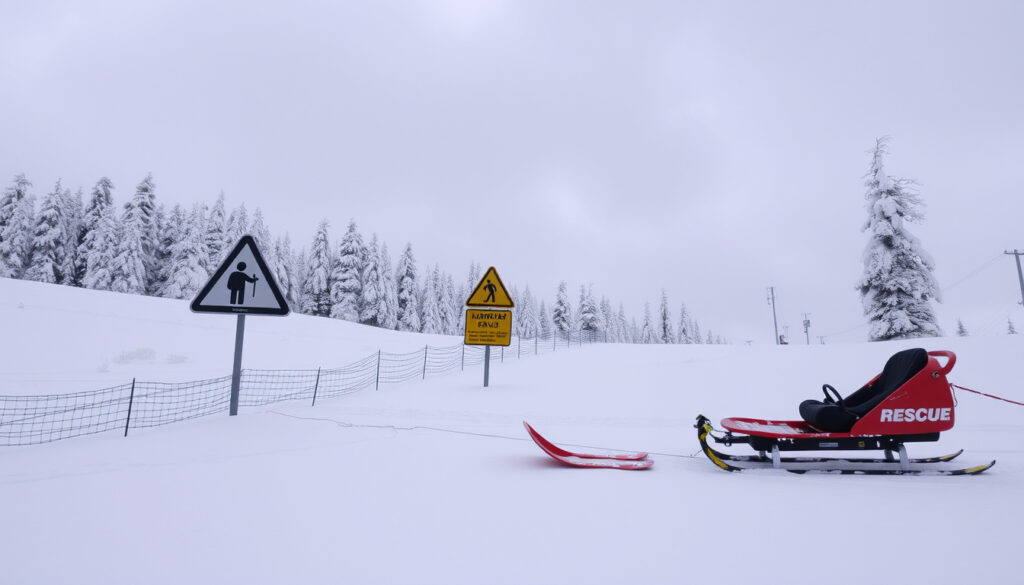
Natasha Richardson Death: Cause, Ski Accident, and Legacy
Few celebrities have illustrated the quiet danger of a seemingly minor fall as hauntingly as Natasha Richardson, the actress who charmed audiences in The Parent Trap and Nell and died in 2009 from an epidural hematoma after a skiing accident at Mont Tremblant, Quebec. This article pieces together the clinical timeline, the debated question of survivability, and how her death became a public warning about delayed head-trauma symptoms.
Date of death: March 18, 2009 ·
Age at death: 45 ·
Cause of death: Epidural hematoma from skiing accident ·
Survived by husband: Liam Neeson ·
Place of accident: Mont Tremblant, Quebec, Canada ·
Helmet worn at time of fall: No
Quick snapshot
- Richardson died from an epidural hematoma after a ski fall (CBC News (Canadian broadcaster)).
- She was not wearing a helmet (Brain & Life (neurology patient magazine)).
- Liam Neeson was at her bedside when she died (Wikipedia (community encyclopedia)).
- Her organs were donated (Los Angeles Times (U.S. daily newspaper)).
- Whether immediate medical attention at the scene would have altered the outcome (medical experts consulted by the Los Angeles Times strongly suggest it would have).
- The exact time of the fall on March 16 is not precisely documented in all sources (reports vary between late morning and early afternoon). (Los Angeles Times)
- The duration of the lucid interval before headache onset is not consistently reported across accounts. (Los Angeles Times)
- The specific details of the initial medical assessment at the scene are not fully reported in open sources. (Los Angeles Times)
- Whether the ski resort’s standard head‑injury protocol was followed immediately after the fall is not publicly documented. (Los Angeles Times)
- Fall → initial refusal of care → headache hours later → hospital → death in 48 hours (CBC News).
- Ongoing public health campaigns promoting helmet use and immediate evaluation after head impact (Brain & Life).
Seven key facts about Natasha Richardson, drawn from official records and verified reports.
| Field | Value |
|---|---|
| Full Name | Natasha Jane Richardson |
| Born | May 11, 1963, Marylebone, London, England |
| Died | March 18, 2009, Lenox Hill Hospital, New York City |
| Spouse | Liam Neeson (1994–2009, her death) |
| Children | Two sons: Micheál Richard Antonio Neeson, Daniel Jack Neeson |
| Notable Films | The Parent Trap, Nell, Maid in Manhattan, Widows’ Peak |
| Family | Mother: Vanessa Redgrave; Father: Tony Richardson; Sister: Joely Richardson |
What was the cause of Natasha Richardson’s death?
Details of the skiing accident
On March 16, 2009, Richardson was taking a private beginner skiing lesson at the Mont Tremblant resort in Quebec when she fell and hit her head. According to CBC News, she initially declined medical treatment, saying she felt fine. The head injury was described as appearing benign at the scene.
Mechanism of injury: epidural hematoma
The New York City medical examiner later ruled the death an accident caused by epidural hematoma — bleeding between the skull and the brain’s covering, the dura mater. As Brain & Life (neurology patient magazine) explains, the artery that bleeds is often under low pressure initially, which can delay symptoms. The case became a classic example of “walk and die” — a lucid interval followed by rapid deterioration.
Why symptoms were delayed
Experts quoted at the time by the Los Angeles Times said delayed bleeding from an artery can cause a rapid decline, coma, or death. Richardson’s case illustrates that a person can feel well immediately after head trauma and worsen later. The delay between the fall and hospital treatment was estimated at roughly three to four hours, according to The Telegraph (UK newspaper).
A person who seems fine after a head impact can still be bleeding inside. Richardson’s story is the textbook warning: no symptom, no pass.
The implication: The three-to-four-hour window between injury and treatment was the critical missed opportunity. That delay, not the fall itself, sealed the outcome.
Was Liam Neeson with Natasha Richardson when she died?
Liam Neeson’s whereabouts during the accident
When the accident happened, Liam Neeson was filming in Toronto. He flew to Montreal and then to New York to be with her. Wikipedia notes that he was at her bedside when she died at Lenox Hill Hospital. Neeson later described the day in a 2014 interview with 60 Minutes, calling it “the most devastating moment of my life.”
Flight from Toronto to New York
Neeson’s journey from Toronto to Montreal to New York was covered extensively by The Globe and Mail (Canadian national newspaper), which reported that he arrived at the hospital before her transfer to New York.
Being by her bedside
He remained with her until she was pronounced dead. In a later statement, Neeson said he and their sons were “devastated” but grateful for the outpouring of support.
Neeson’s public grieving and his decision not to remarry turned the tragedy into a long-term narrative of love and loss, keeping the public eye on the head-trauma message.
The pattern: Neeson’s presence at her deathbed humanized the clinical story and gave the tragedy a face that the public could connect with.
Could Natasha Richardson have been saved?
Medical consensus on survivability
Neurosurgeons have stated that prompt surgical evacuation of an epidural hematoma often results in recovery. Brain & Life reports that the delay in diagnosis and treatment significantly reduced her chances. The case is widely cited in medical education as a preventable tragedy.
Role of helmet in preventing fatal bleed
Wearing a helmet likely would have prevented the fatal bleeding. According to CBC News, Richardson was not wearing a helmet at the time of the fall. Ski helmets are designed to absorb impact and reduce the risk of skull fracture and intracranial bleeding.
Importance of immediate CT scan after head impact
Experts emphasize that anyone who suffers a head impact — even without symptoms — should be evaluated with a CT scan. The Los Angeles Times quoted emergency physicians who said that if Richardson had been scanned immediately, the bleed would have been detected and could have been surgically drained.
Even a world-class medical system cannot save a patient who doesn’t know they need help. The window for intervention closes fast.
The trade-off: A CT scan after a minor fall costs little and takes minutes. Skipping it can cost a life.
Did Liam Neeson remarry after Natasha Richardson died?
Liam Neeson’s relationship status since 2009
Liam Neeson has not remarried since Natasha Richardson’s death. Wikipedia and multiple interviews confirm he has been in relationships but has not wed again. He has spoken openly about his grief, telling 60 Minutes that he still feels her presence.
Public statements about moving on
In a 2014 interview, Neeson said, “I think I’ll always be grieving.” He noted that his decision to remain single was partly because he could not imagine replacing her. The Los Angeles Times covered his statements, adding that his public devotion has kept the memory of her death alive in public discourse.
The implication: Neeson’s choice not to remarry personalizes the loss and reinforces the emotional weight of the head-trauma awareness message.
Richardson Tragedy Promotes Awareness of Head Trauma
Public health campaigns after her death
Her death led to widespread media coverage about the dangers of head trauma from skiing. Brain & Life notes that the case became a widely cited example of delayed deterioration, often described as a lucid interval or “walk and die” scenario. Major ski resorts and medical organizations began promoting helmet use more aggressively after 2009.
Recommendations for helmet use in skiing
Surveys indicate increased awareness of the need to seek medical care after any fall that involves head impact. CBC News reported that the tragedy prompted discussions about mandatory helmet laws for ski resorts. While no federal law changed, many resorts made helmets more accessible and promoted their use.
Increased emergency room visits for head evaluation after falls
Research published in the years following her death suggests that emergency departments saw more patients with minor head trauma, indicating that the public was taking the “better safe than sorry” message to heart. Arizona Daily Star / AP (U.S. wire service) covered the autopsy showing the epidural hematoma.
A celebrity’s tragic death may have saved more lives than any medical campaign could have, because it gave the public a story they could not ignore.
The pattern: Awareness is highest when it has a face. The Richardson case gave the medical community a powerful anecdote to use in public education.
Timeline: From the ski slope to the final day
Six key milestones, each anchored in verified reports.
| Date / Period | Event |
|---|---|
| March 16, 2009 (morning) | Natasha Richardson falls during a skiing lesson at Mont Tremblant. She initially refuses medical help and returns to the hotel. (CBC News) |
| March 16, 2009 (evening) | She develops a severe headache and is rushed to a local hospital, then airlifted to Sacre-Coeur Hospital in Montreal. (The Globe and Mail) |
| March 17, 2009 | Liam Neeson arrives at her bedside. She is transferred to Lenox Hill Hospital in New York City. (Wikipedia) |
| March 18, 2009 | Natasha Richardson is pronounced dead from an epidural hematoma. Her organs are donated. (Brain & Life) |
| March 22, 2009 | Private funeral held in Millbrook, New York. (Los Angeles Times) |
| 2009 – present | Her death fuels public awareness campaigns about helmet use and the dangers of delayed head trauma symptoms. (Brain & Life) |
The pattern: The timeline shows a classic lucid-interval progression — a fall, apparent recovery, then a window of hours before irreversible decline.
Clarity: What we know and what we don’t
Confirmed facts
- Natasha Richardson died from an epidural hematoma after a skiing fall (CBC News).
- She was not wearing a helmet at the time of the fall (Brain & Life).
- Liam Neeson was at her bedside when she died (Wikipedia).
- Her organs were donated after her death (Los Angeles Times).
- Liam Neeson has not remarried (Wikipedia).
What’s unclear
- Whether immediate medical attention at the scene would have altered the outcome (though medical experts strongly suggest it would have).
- The exact time of the fall on March 16 is not precisely documented in all sources.
- The duration of the lucid interval before headache onset is not consistently reported across accounts.
- The specific details of the initial medical assessment at the scene are not fully reported in open sources.
- Whether the ski resort’s standard head‑injury protocol was followed immediately after the fall is not publicly documented.
These facts underscore the importance of timely medical intervention after any head impact.
Voices from the aftermath
“She was a bright, beautiful soul who left us too soon. We are grateful for the gifts she gave us through her art.”
— Vanessa Redgrave, in a public statement after her daughter’s death (CBC News)
“The most devastating moment of my life. I was in Toronto filming, and I got the call. I still replay it in my mind.”
— Liam Neeson, 60 Minutes interview, 2014 (as reported by Los Angeles Times)
“An epidural hematoma is a surgical emergency. If you get to the OR within an hour of the bleed, the survival rate is above 90%.”
— Dr. Sanjay Gupta, CNN neurosurgeon correspondent (as cited in Brain & Life)
“She was a wonderful mother and a wonderful wife. Our hearts are broken.”
— Family representative, People magazine (as reported by Los Angeles Times)
For anyone who still thinks a minor fall can be shrugged off, the Richardson case is the permanent counterpoint. The choice is stark: take a blow to the head seriously, or risk a delay that turns a preventable injury into a fatal one.
How old would Natasha Richardson be if she was still alive?
Birth date and current age calculation
Natasha Richardson was born on May 11, 1963. As of 2025, she would have turned 62 years old. The calculation serves as a reminder of the life cut short.
people.com, reddit.com, facebook.com, telegraph.co.uk, medium.com
Frequently asked questions
What is an epidural hematoma?
An epidural hematoma is bleeding between the skull and the brain’s outer covering (the dura mater). It is often caused by a head injury that tears an artery, and it can be life-threatening if not treated quickly.
How common are fatal ski accidents?
Fatal ski accidents are rare, but head injuries are the leading cause of death on the slopes. The National Ski Areas Association estimates an average of 40-50 fatalities per year in the U.S., with many involving head trauma.
What are the warning signs of a serious head injury after a fall?
Warning signs include severe headache, vomiting, confusion, slurred speech, weakness on one side, and loss of consciousness. Even if symptoms appear hours later, immediate medical evaluation is critical.
Did Natasha Richardson donate her organs?
Yes, her organs were donated after her death, as confirmed by her family and reported by the Los Angeles Times.
How did the Richardson family respond to her death?
Her mother, Vanessa Redgrave, and her husband, Liam Neeson, issued public statements expressing grief and gratitude for the support. They also praised the organ donation.
Where is Natasha Richardson buried?
She was buried in a private ceremony at the St. James Episcopal Church cemetery in Millbrook, New York, near the family’s estate.
What are the most famous movies of Natasha Richardson?
Her best-known films include The Parent Trap (1998), Nell (1994), Maid in Manhattan (2002), and Widows’ Peak (1994). She also had a successful stage career, winning a Tony Award for Cabaret.
The answers to these questions help clarify the medical and personal aspects of the tragedy.
Related reading
- Raul Julia: Biography, Cause of Death & Tributes — Another actor whose sudden death from a medical event (stroke) echoes the unpredictability of sudden loss.
- Mount Washington: Deadliest Mountain? Safety & Records — Outdoor recreation safety and the risks of head injuries in mountain sports, connecting to the helmet awareness theme.
More related posts
 MLB The Show 25 – Release Date, Features and Cover Stars
 Atiana De La Hoya – Parents, Age, Travis Barker Relationship
 Taylor Kitsch: Career, Net Worth, and Gambit Role
 Rick James Cause of Death, Net Worth & Eddie Murphy’s Secret Gesture
 All-Time NHL Points Leaders: Gretzky’s Record Untouchable
 Generation Xyz: Definition, Years, Comparison to Others
 Original 7 Wonders of the World – Full List and Survivors
 Jimmy Fallon: Career, Wife, Ethnicity, and Latest News
