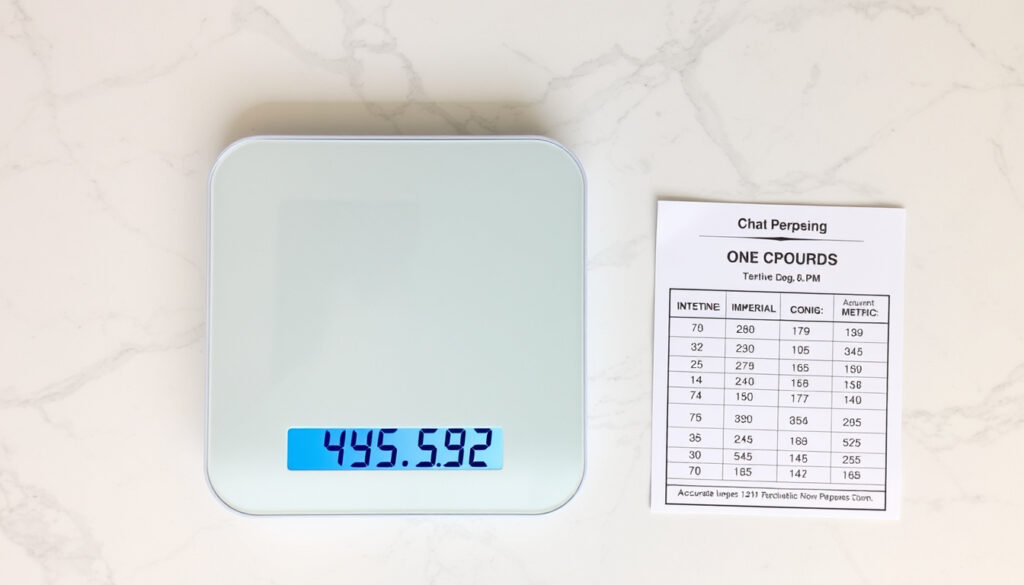
How Many Grams Are in a Pound? 453.592g + Chart
If you’ve ever eyeballed a recipe and wondered whether that 500g bag of flour is actually a pound, you’re not alone. The gap between what food labels say and what the scale actually reads trips up plenty of home cooks. This guide cuts through the confusion with the exact conversion, real-world examples, and a quick myth-busting reality check so you never second-guess a measurement again.
1 Pound (lb): 453.592 g · Half Pound: 226.796 g · 500 g: 1.102 lb · 1 Ounce (oz): 28.35 g
Quick snapshot
- 1 lb = 453.59237 g (Kyle’s Converter)
- Standardized in 1959 internationally (NIST)
- Troy pound used for precious metals differs from avoirdupois standard (Maguire Reference)
- Regional packaging may round to convenient approximations (NIST)
- 1959: International yard-pound agreement locked in exact metric definition (Kyle’s Converter)
- Use the conversion chart to nail precise measurements for baking, cooking, and shipping
| Label | Value |
|---|---|
| Grams in 1 Pound | 453.59237 g |
| Pounds in 500 g | 1.10231 lb |
| Half Pound Grams | 226.7959 g |
| Pound in kg | 0.453592 kg |
How Many Grams Are In A Pound?
One avoirdupois pound equals exactly 453.59237 grams. This isn’t a rounded estimate—it’s a legally standardized value that countries using the imperial system agreed to in 1959, binding the pound directly to the kilogram through the international yard and pound agreement.
Exact avoirdupois value
The avoirdupois pound (the standard used in the US and imperial systems) is defined as exactly 0.45359237 kilograms, which works out to 453.59237 grams. This definition came from the Conversion.org precision calculator based on international agreements that replaced older, varying definitions.
- 1 pound = 16 ounces avoirdupois
- 1 pound = 7000 grains
- 1 ounce = 28.349523125 grams
Conversion formula
To convert pounds to grams, multiply the pound value by 453.59237. Going the other way, divide grams by 453.59237 or multiply by the inverse factor (0.0022046226218488). The Unit Converters calculation tool provides this exact inverse for reverse calculations.
What is 1 Pound Equal to in Grams?
One pound equals 453.59237 grams under the avoirdupois system, which is the standard weight system for most English-speaking countries. This figure is so precisely defined that eight independent sources at Kyle’s Converter confirm it as the official conversion factor.
Standard US pound
The US customary pound traces its exact definition back to the Metric Conversion Act of 1866, but the modern value crystallized in 1959 when an international agreement set 1 avoirdupois pound = 0.45359237 kg exactly. Per Omni Calculator’s metric conversion reference, this ties the pound to SI units permanently.
Troy pound difference
Precious metals and gemstones use a different system—the troy pound—which contains only 12 troy ounces (373.24 g total), compared to the avoirdupois system’s 16 ounces. The Maguire Reference conversion tables show that 14.583 troy ounces equal exactly one avoirdupois pound.
Bakers and cooks working with gold, silver, or jewelers’ measurements need to use troy weights, not avoirdupois. Confusing the two systems overestimates precious metal quantity by about 18%. The same number “pound” can mean two different masses depending on context.
Is 500g the Same as 1 lb?
No. A full 500 grams actually equals 1.10231 pounds—roughly 10% heavier than a pound. The NIST Taking Measure Blog explicitly debunks the common packaging myth that a 1-pound jar holds exactly 500 grams.
Half pound equivalents
Half a pound (8 ounces) equals 226.796185 grams, not the 250g that rounded approximations might suggest. If you’re following a European recipe that calls for 250g of butter, you need slightly more than a quarter pound—closer to 9 ounces by US standards.
200g and 300g comparisons
A 200-gram portion weighs about 0.441 pounds, while 300 grams comes to roughly 0.661 pounds. Neither value falls near a clean half-pound, which means cooks who rely on “half a pound is about 200g” are consistently shortchanging their measurements.
The USDA FoodKeeper guidelines recommend precise weights because baking chemistry depends on exact flour-to-liquid ratios. A 10% shortfall in flour transforms a bread recipe into dense, under-fermented dough.
Is 200 Grams Half a Pound?
200 grams is not half a pound. The actual half-pound weight is 226.8 grams—a gap of nearly 27 grams that adds up fast in large batches. The Inch Calculator’s flour conversion tool confirms that even professional kitchens underestimate this difference.
300 grams check
Three hundred grams registers at 0.661 pounds, which is 339 grams short of a full pound. For context, that’s roughly the weight of a medium apple sitting on your kitchen scale—but many home cooks would assume they’re only about one-third of a pound away from a full pound.
Quick reference table
Five common conversions, with the correct values:
| Grams | Pounds | Common assumption |
|---|---|---|
| 100 g | 0.220 lb | 0.25 lb (under by 30g) |
| 200 g | 0.441 lb | 0.5 lb (under by 27g) |
| 300 g | 0.661 lb | 0.75 lb (under by 40g) |
| 500 g | 1.102 lb | 1 lb (over by 102g) |
| 1000 g | 2.205 lb | 2.2 lb (close) |
The implication: even seemingly minor 50-gram errors compound dramatically when scaling recipes, turning precise baking into a gamble with texture and rise.
How Many Grams Are in a Pound of Flour?
A pound of flour by mass is always 453.59237 grams, but volume varies significantly based on how the flour is packed. The NIST measurement standards recommend weighing flour in grams for baking precision because a cup of sifted flour weighs roughly 30% less than a cup of densely packed flour.
Sugar, water, oil variations
Water and oil are denser than flour—500ml of water weighs 500g exactly, but 500g of flour measures about 2.5 cups loosely sifted. Sugar granularity also affects packing density: granulated sugar packs heavier per cup than powdered sugar.
Density considerations
For precise baking, the Inch Calculator conversion guide recommends using the conversion factor 0.002205 when transforming gram flour measurements to pounds. This accounts for the slight mass variations between flour types while keeping the base conversion accurate.
American home bakers clinging to cup measurements lose precision that scales provide. European recipes written in grams produce more consistent results because weight is invariable—1kg of flour is always 1kg, while 1 cup depends on how you scoop, sift, or pack.
Conversion Steps
To convert any weight between pounds and grams, follow these steps:
- Pounds to grams: Multiply the pound value by 453.59237
- Grams to pounds: Divide the gram value by 453.59237
- Quick mental math: 100g ≈ 0.22 lb; 500g ≈ 1.1 lb
- Verify with a calculator: For baking or shipping, use the exact factor to avoid cumulative errors
What this means: once you internalize the 453.59237 factor, you can reverse-engineer any recipe regardless of whether it lists ingredients in pounds or grams.
Comparisons: Avoirdupois vs Troy Systems
Two distinct pound systems operate in parallel, creating confusion when people assume one standard applies universally:
| System | Ounces per pound | Grams per pound | Primary use |
|---|---|---|---|
| Avoirdupois | 16 oz | 453.592 g | Cooking, shipping, body weight |
| Troy | 12 oz | 373.238 g | Precious metals, gemstones |
The pattern: always confirm which system your context demands, or you’ll overpay for gold and under-measure flour by the same 80-gram margin.
What the Myth About 500g = 1lb Costs You
The packaging shortcut that a “1-pound” jar holds 500g costs consumers money and precision. According to NIST measurement standards, a peanut butter jar labeled 1 lb actually contains 453.6g, while European products marked 500g exceed the US 1-pound standard by 102 grams.
“A 1 lb jar of peanut butter is 500g? Actually 500g equals 1.1 lb—those jars are heavier than they look.”
— NIST Taking Measure Blog
Upsides
- The avoirdupois pound has a fixed, universally agreed value since 1959
- Conversion factors are exact, requiring no rounding
- Scales and digital kitchen tools handle the math automatically
Downsides
- Old approximation “500g = 1lb” persists in packaging and recipes
- Troy vs avoirdupois confusion affects jewelry and bullion buyers
- Volume measurements (cups) introduce variability that weight avoids
Quotes
“The modern pound is linked directly to the kilogram through the international yard and pound agreement adopted in 1959.”
— Kyle’s Converter
“Measure it in grams! So much more reproducible, not to mention far more precise.”
— NIST measurement expert
Summary
One pound is precisely 453.59237 grams under the avoirdupois system standardized in 1959. The myth that 500g equals 1lb overshoots by about 102 grams—a meaningful gap for bakers, shippers, and anyone measuring ingredients by weight. Home cooks who switch to gram-based recipes when precision matters eliminate the guesswork that costs them in flavor and consistency.
Related reading: soup stock recipes · Tim Hortons flatbread pizza calories
Frequently asked questions
Why is a pound called a pound?
The word “pound” derives from the Latin “pondo” (a weight), and the abbreviation “lb.” comes from “libra,” the Roman unit that roughly equaled 12 ounces. The avoirdupois system later standardized the modern pound.
Is 1 pound the same as 1kg?
No. One kilogram equals 2.20462 pounds, making a pound only about 45% of a kilogram. A kilogram is roughly the mass of one liter of water.
How many grams in an ounce?
One avoirdupois ounce equals 28.349523125 grams. Since there are 16 ounces in a pound, multiplying by 16 yields the total pound-to-gram conversion.
How many pounds in 300 grams?
Three hundred grams equals 0.661 pounds (about 10.6 ounces). This is significantly less than the three-quarter pound (340g) many home cooks assume.
What is the weight of 500 grams in pounds?
Five hundred grams equals 1.10231 pounds—about 102 grams more than a full pound. This is why European 500g packages feel heavier than US 1-pound labels.
Is half a pound 500g?
No. Half a pound equals 226.8 grams, not 500g. Five hundred grams is more than double a half-pound, sitting closer to 1.1 pounds.
How many grams are there in 1 pound?
Exactly 453.59237 grams in one avoirdupois pound. This value has been standardized internationally since the 1959 yard-pound agreement.
More related posts
 Water Filtration System for Home – Best 2025 Picks
 What Is JPG vs PNG: Differences, Uses & Which to Choose
 Christina Hendricks: Biography, Measurements & Career Facts
 All-Time NHL Points Leaders: Gretzky’s Record Untouchable
 Ron Perlman: Biography, Ethnicity, Marriages, and Career
 Ron Weasley: Complete Guide to the Harry Potter Character
 Draco Malfoy: Marriage, Wealth, and Relationships
 Trevor Moore Death: Cause, Career, and Legacy
