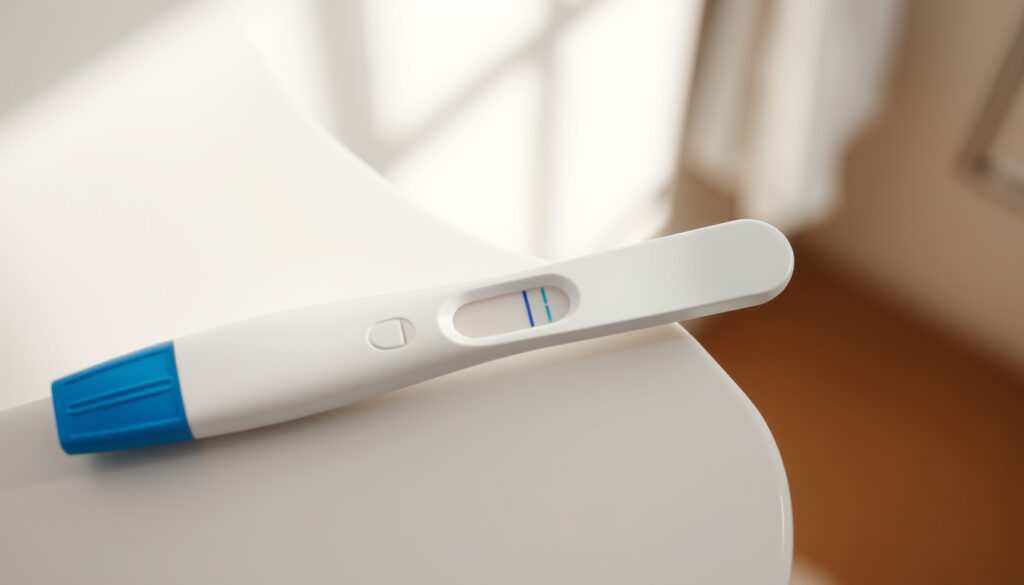
Clear Blue Pregnancy Test: Early Detection, Accuracy & Results
Watching two lines appear on a pregnancy test can feel like the longest moment of your life. Clearblue has become one of the most trusted names in home pregnancy testing, but with different models, varying accuracy windows, and confusing weeks indicators, it’s easy to get overwhelmed before you even pee on the stick. This guide cuts through the noise using Clearblue’s own data and medical sources to answer the questions that actually matter.
Accuracy: over 99% from expected period day · Early Detection: 6 days before missed period · Weeks Indicator: available on digital models · Test Types: digital, stick, early detection · False Positive Risk: rare, explained by sources
Quick snapshot
- Over 99% accurate from the day of your expected period (Clearblue Healthcare Professionals)
- Detects pregnancy 6 days before a missed period on Ultra Early models (Clearblue Healthcare Professionals)
- Two lines mean pregnant no matter how faint (Clearblue Early Detection Test)
- Exact false positive rates without individual context
- How much hCG levels vary between individuals at the same stage
- Clearblue Rapid Detection won Red Dot Design award in 2012 (Clearblue Rapid Detection)
- SmartGuard Technology launched in established digital models (Clearblue YouTube)
- Always confirm a positive result with your doctor
- Retest if negative but period hasn’t arrived
| Field | Value |
|---|---|
| Brand | Clearblue |
| Accuracy | Over 99% from expected period |
| Earliest Test | 6 days before missed period |
| Unique Feature | Weeks indicator on select models |
| Availability | Pharmacies, Amazon, Tesco, Boots |
How early can a Clearblue detect pregnancy?
Clearblue’s earliest detection test can identify pregnancy 6 days before your missed period. According to Clearblue’s published data for healthcare professionals, their Ultra Early Detection test catches 71% of pregnancies that many users want to know about so much earlier. The accuracy climbs steeply as you get closer to your expected period day: >99% at 0 and -1 days before, 98% at -2 and -3 days, and 94% at -4 days (Clearblue Healthcare Professionals).
The reason early detection works comes down to how sensitive the test is to the hCG pregnancy hormone. Clearblue’s Early Detection test picks up hCG at just 10 mIU/ml, which is a lower threshold than many competitors. That means it can register pregnancy before your body has built up higher hormone levels. In comparison, the Clearblue Digital detects at 25 mIU/ml (Clearblue Benefits). The trade-off is that testing earlier means accepting lower accuracy—the earlier you test, the higher the chance of a false negative even if you are pregnant.
Testing 6 days before your missed period catches most (but not all) pregnancies. If you get a negative and your period still hasn’t shown, test again a couple of days later when hCG levels have had more time to rise.
Detection timeline
Clearblue breaks down their accuracy by how many days before the expected period you test:
| Days before expected period | Accuracy rate |
|---|---|
| 0 (day of expected period) | >99% |
| 1 day before | >99% |
| 2 days before | 98% |
| 3 days before | 98% |
| 4 days before | 94% |
| 5 days before | 71% |
The implication: if you’re testing on the day your period was due, you can trust the result almost without question. Five days earlier, you’re working with roughly a 7-in-10 chance of detection.
Best testing window
According to Clearblue’s official instructions, hold the absorbent tip in your urine stream for 5 seconds, lay the test flat, and read results in 3 to 5 minutes—never after 10 minutes (Clearblue Early Detection Test). The extra-wide absorbent tip is specifically designed to reduce errors and make midstream sampling easier. Results appear as two lines (pregnant) or one line (not pregnant), and two lines always mean pregnant regardless of how faint they look.
How far am I if Clearblue says 1/2 weeks?
The Clearblue Digital Pregnancy Test with Weeks Indicator tells you roughly how far along you are based on the hCG level in your urine. If it shows “1-2 weeks,” that typically corresponds to 3-4 weeks since your last menstrual period (LMP). A “2-3 weeks” result means roughly 4-5 weeks LMP (Clearblue Early Digital). This measurement aligns with how ultrasound dating works, because both estimate gestational age from the first day of your last period.
It’s important to understand what the weeks indicator is measuring: your hCG level, not an actual ultrasound. Because hCG ranges overlap between weeks of pregnancy, Clearblue uses ranges rather than precise weeks. A 3-4 week pregnancy according to LMP can show as “1-2 weeks” on the Clearblue simply because your hCG happens to fall in that range.
Weeks indicator explained
Clearblue’s digital tests use SmartGuard Technology, which includes an extra-wide tip, a stop light that confirms enough urine was absorbed, and Floodguard to reduce user error. The weeks indicator works because Clearblue has calibrated their hCG thresholds against known gestational ages (Clearblue Early Digital). The result appears in words on the display—no interpreting faint lines required.
Relation to actual gestation
Pregnancy weeks are counted from the first day of your last menstrual period, which means “1-2 weeks pregnant” actually means your period is only 1-2 weeks late. Medically, you conceived around week 2 or 3. The Clearblue Digital’s weeks indicator is designed to match this LMP dating system, making it easier to discuss your pregnancy with your healthcare provider.
The weeks indicator estimates from hCG levels, not direct measurement. If your hCG is at the low or high end of a range, the indicator may under- or overestimate your actual gestational age. Your doctor will use ultrasound for precise dating.
Should I pee on the stick or dip it?
Both methods work fine with Clearblue tests. The midstream approach—holding the tip in your urine stream for 5 seconds—is designed to be clean and simple with the extra-wide absorbent tip. The dipstick approach—collecting urine in a cup and dipping the test—works equally well if you prefer not to stream directly. Clearblue states that both methods produce accurate results, as long as you follow the timing instructions (Clearblue Rapid Detection).
The Rapid Detection model includes Floodguard Technology, which Clearblue reports reduces user error by over 70% (Clearblue Rapid Detection). This is particularly helpful for the midstream method, where too much urine or splashing can sometimes cause errors on lesser tests.
Midstream vs dipstick methods
Midstream testing is the most common approach for Clearblue. Point the absorbent tip downward, hold it in your urine stream for 5 seconds, and keep the tip pointed downward while you replace the cap. For dipstick testing, collect urine in a clean, dry container and dip the test for the time specified in your package instructions—typically 5-20 seconds depending on the model.
Instructions from Clearblue
Regardless of method, Clearblue’s universal steps are: sample for 5 seconds, lay the test flat, and read within 10 minutes (Clearblue Rapid Detection). A negative result very early in pregnancy may still mean you’re pregnant—your hCG might not have reached the detection threshold yet. Clearblue specifically notes that if you get a negative and your period hasn’t started, you should retest in a few days.
Can Clearblue give a false positive?
False positives are rare with Clearblue tests, but they can happen. The most common causes are recent pregnancy (birth, miscarriage, abortion), fertility treatments that include hCG hormones, and certain rare medical conditions (Clearblue Benefits). If you received an hCG trigger shot as part of fertility treatments, residual hormone in your system can trigger a false positive even if you’re not pregnant.
Clearblue’s DualSense Technology, found in their Early Detection test, is designed to reduce false positives by detecting both hCG and FSH (follicle-stimulating hormone). This allows the test to distinguish between true pregnancy hCG and other hormone patterns that might otherwise cause confusion (Clearblue Early Detection Test).
Causes of false positives
- Recent childbirth, miscarriage, or abortion (residual hCG)
- Fertility treatments with hCG trigger shots (like Ovidrel)
- Certain medications containing hCG
- Rare conditions like hCG-secreting tumors
- Evaporation lines mistaken for positives (on non-digital tests)
Reducing risks
For most users, following the instructions carefully eliminates the biggest risk factors. Read your result within the specified time window—evaporation lines that appear after 10 minutes can look like positives on traditional line tests. A digital test removes this ambiguity entirely by showing a clear ” Pregnant ” or ” Not Pregnant ” message (Clearblue Early Detection Test). Always confirm a positive result with your healthcare provider, who can order a blood test or ultrasound for definitive confirmation.
Is 4am considered first morning urine?
If you haven’t urinated since going to sleep, a 4am sample qualifies as first morning urine. First morning urine refers to the first urine you produce after a period of sleep, not a specific clock time. For early testing, this matters because hCG concentrates in urine overnight while you sleep and fluid intake dilutes it throughout the day. The more concentrated your urine, the more likely the test detects low hCG levels.
According to medical sources, hCG doubles every 2-3 days in early pregnancy (MadeForMums). This means testing at the same time each day gives you comparable results. If you test in the afternoon and get a negative, try first morning urine the next day before drinking fluids.
Optimal urine for testing
Clearblue’s home pregnancy tests are designed to work with any urine sample, but first morning urine provides the highest hCG concentration for early detection. Avoid drinking large amounts of fluid before testing, as this can dilute hCG levels and produce a false negative when you’re testing early. If you’re testing on or after your expected period day, the difference between morning and afternoon urine is less significant—the hCG level is typically high enough to detect any time of day.
Timing tips
- Test with first morning urine for earliest detection (6 days before missed period)
- Limit fluid intake the night before early testing
- Read results within the 10-minute window to avoid evaporation lines
- Retest after 48 hours if negative but period hasn’t arrived
Related reading: Mother’s Day 2025 · Questions to Ask Your Partner
clearblue.com, thebump.com, clearblue.com, clearblue.com, clearblue.com
Clearblue tests excel in early hCG detection, yet faint lines often confuse users, with faint vs evaporation line guide clarifying evaporation line differences for confident results.
Frequently asked questions
What does a positive Clearblue pregnancy test look like?
On traditional line tests, a positive result shows two lines—no matter how faint the second line appears. Two lines always mean pregnant. On digital tests, the word ” Pregnant ” appears on the display with the weeks indicator on compatible models.
How accurate is Clearblue digital pregnancy test?
Clearblue Digital tests are over 99% accurate from the day of your expected period, matching the accuracy of their line tests. The digital version eliminates line interpretation ambiguity by displaying results in words (Clearblue Benefits).
When should I test with Clearblue Early Detection?
Clearblue recommends testing 6 days before your missed period with their Early Detection model. Accuracy at this window is 71%. For highest reliability, test on the day your period is due or later, when accuracy exceeds 99% (Clearblue Early Testing).
What causes false negatives on Clearblue tests?
Testing too early before hCG has built up to detectable levels is the most common cause. hCG rises every 2-3 days, so a test that reads negative one day may turn positive two days later. Drinking too much fluid before testing can also dilute hCG below detection thresholds.
How soon after a missed period to retest?
If you receive a negative result but your period still hasn’t started, Clearblue recommends retesting in 48 hours. By then, hCG levels should have increased enough for detection even if the first test was taken very early.
Are Clearblue tests safe for early use?
Yes. Clearblue home pregnancy tests are designed for repeated use and carry no medical risk. The only consideration is that very early testing (6 days before a missed period) has lower accuracy, so a negative result should be confirmed with a retest if your period doesn’t arrive.
What if Clearblue shows an error?
Error messages typically indicate insufficient urine or a faulty test. If you receive an error, repeat with a new test, ensuring you wet the absorbent tip for the full 5 seconds. Do not reuse a test that has shown an error message.
What the data confirms
- Over 99% accuracy from the day of expected period
- Detects pregnancy 6 days before missed period (71% detection rate)
- Two lines mean pregnant regardless of faintness
- False positives are rare and have explained causes
- Digital tests display words for unambiguous results
What remains unclear
- Exact false positive rates without knowing individual medical history
- Precise hCG variation between individuals at the same gestational stage
- Real-world user error rates from independent studies
All Clearblue pregnancy tests are over 99% accurate from the day of your expected period. — Clearblue (manufacturer), Clearblue Benefits
95% believe a 99% accurate result is more important than taking a pregnancy test as early as possible. — MadeForMums Survey, MadeForMums
More related posts
 Toto Wolff Net Worth: How the F1 Boss Built a Billion
 Shubman Gill: Age, Girlfriend, Health, Net Worth Facts
 Kylie Minogue: Partner, Cancer, and Marital Status
 AI Chatbot Guide: Legality, Safety & Free Options (2024)
 Cheap Flights to Toronto from Edmonton: Deals & Times
 Jonathan-I mael Diaby: NHLer Turned Rapper & Shore y Actor
 Ellen Barkin: Career, Animal Kingdom Exit & Net Worth
 Who is Saoirse Ronan? Bio, Career & Pronunciation
